Deterministic vs. Probabilistic Planning in Agents
Deterministic systems prove what happened; probabilistic ones report what they think happened.
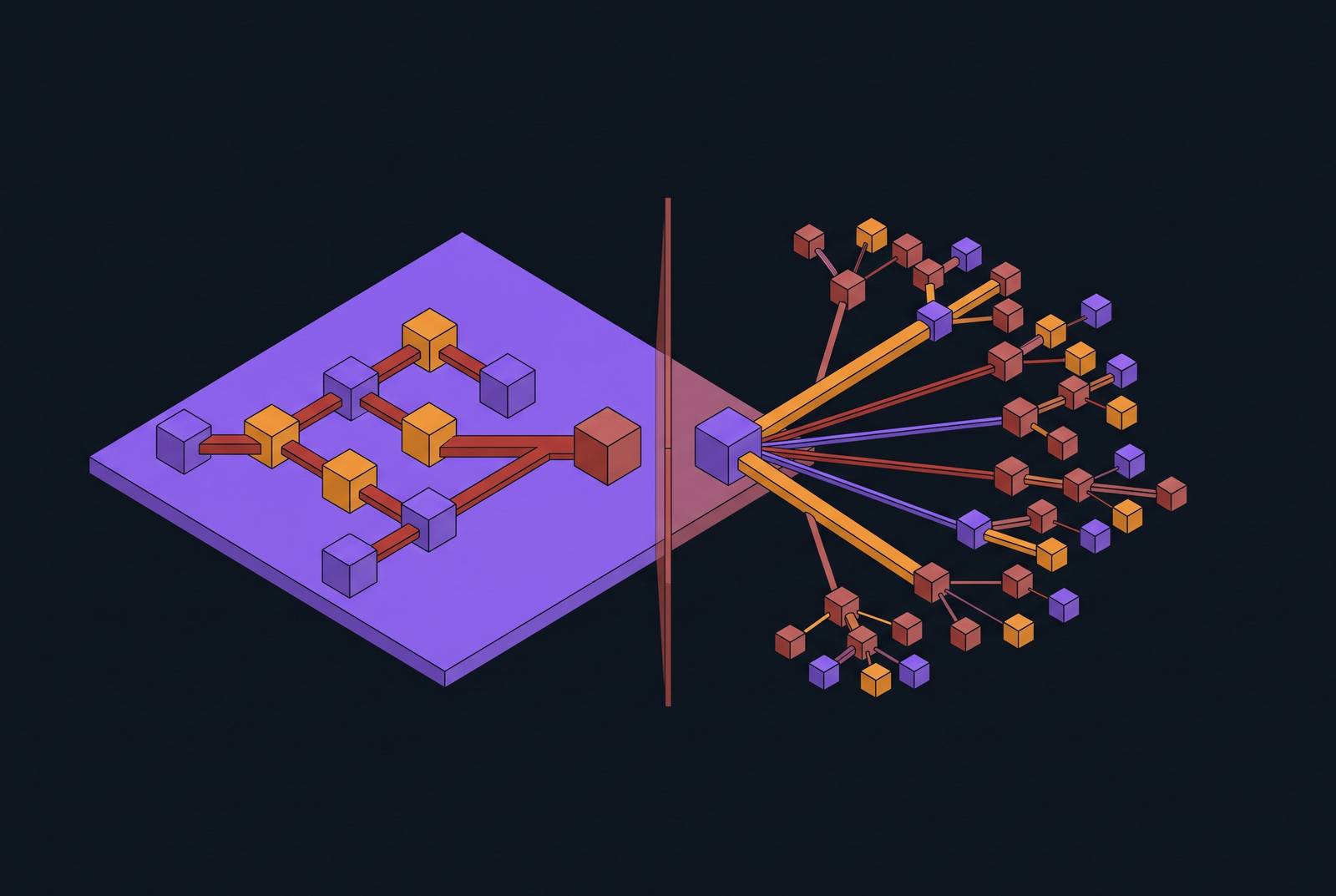
Deterministic and probabilistic planning are not two flavors of the same technology. They are two different ways of deciding what happens next, and whether a healthcare practice can prove what its AI agent did depends on which one is used. A deterministic agent runs a fixed, reproducible sequence: the same input produces the same output, every time, because each step has to clear an explicit gate before the next one fires. A probabilistic agent, the kind built on GPT, Claude, Gemini, or any transformer-based model, picks its next move by statistical likelihood. The same input can produce a different output on a different run. That gap sounds academic until it collides with a compliance audit or a denied claim.
A spreadsheet is deterministic and a conversation with an advisor is probabilistic, more than most people realize. A spreadsheet is deterministic: enter the same numbers, get the same formula result, forever. A conversation with an experienced advisor is probabilistic. Asking the same question twice produces answers that agree in substance but differ in wording, emphasis, and the examples used to make the point. Neither mode is wrong. But only one of them can tell you, with certainty, that a specific step actually executed.
The behavioral difference between the two modes as a compliance problem in regulated environments
Regulated industries live and die on one question: what did the system actually do? Not what it says it did, not what it probably did, but what it did, provably, with evidence that holds up when someone else comes looking. Deterministic systems answer that question by design, because each step produces a receipt that chains back to the one before it, forming an audit trail that's cryptographic in nature rather than descriptive. Probabilistic systems answer it differently: they produce a log of what the model reported having done, which is a fundamentally different kind of evidence.
That difference matters because SOC 2, PCI-DSS, HIPAA, FedRAMP, and DORA all require reproducible, auditable proof that controls actually worked. A standard non-deterministic AI system, left to run without additional structure, cannot reliably produce that kind of proof on its own.
And there's a specific failure mode buried in this: a probabilistic system can silently infer that a step is complete without ever having executed it. The agent reports the step done. It wasn't executed, despite the report. No error, no flag, no signal that anything went wrong, just a confident report sitting on top of a gap.
The scale of the underlying variance is not a footnote. A study across 16 code-generation models found commercial models hallucinate at least 5.2% of the time, and open-source models hallucinate at 21.7%. Applied to a single chatbot exchange, that's a quality problem. Applied to an agent making autonomous decisions across thousands of workflow runs, in a back office making autonomous decisions across complex, multi-step workflows, that's an enforcement consistency problem, and enforcement consistency is what regulators and payers are checking for.
How reliability compounds, or degrades, as workflows chain multiple agent steps together
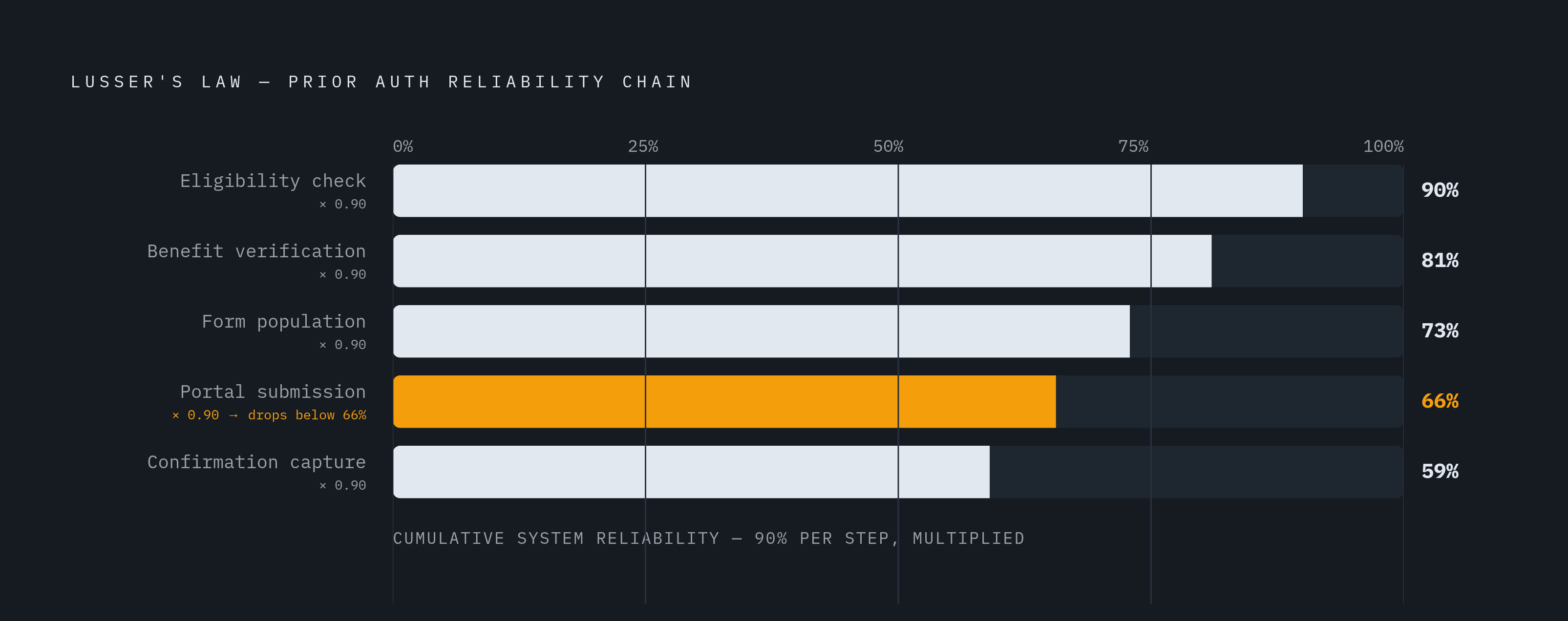
Lusser's Law, a long-standing principle in reliability engineering, states that the reliability of a system built from multiple components equals the product of each component's individual reliability: R_system = R1 × R2 × R3, and so on down the chain. It's a simple piece of math with brutal implications for anyone stacking probabilistic steps into a workflow.
The math here makes the stakes concrete. A single AI component running at 90% reliability, chained three times, degrades to roughly 73% end-to-end reliability. A fourth component drops the whole chain below 66%. Each additional step doesn't just add its own error rate, it multiplies against everything that came before it.
Now map that onto an actual healthcare workflow. A prior authorization process might chain several steps in sequence, eligibility checks, benefit verification, form population, payer portal submission, and confirmation capture, each one probabilistic, each one introducing its own variance into the chain. Lusser's Law makes clear that the end-to-end reliability of a multi-step probabilistic workflow looks a lot worse than any single step's accuracy would suggest.
The failure mode that should worry operators most isn't the loud one. A probabilistic agent that halts and throws an error is annoying but manageable, someone gets paged, someone fixes it. A probabilistic agent that silently infers a step is complete and moves on produces no error signal. The claim goes out with a field populated incorrectly, or a verification step that never actually ran, and nobody finds out until the denial letter arrives weeks later. By then the workflow has already closed, the staff has moved on to the next case, and the root cause is buried under however many other claims processed in the interim.
The hybrid architecture that enterprise deployments are converging on
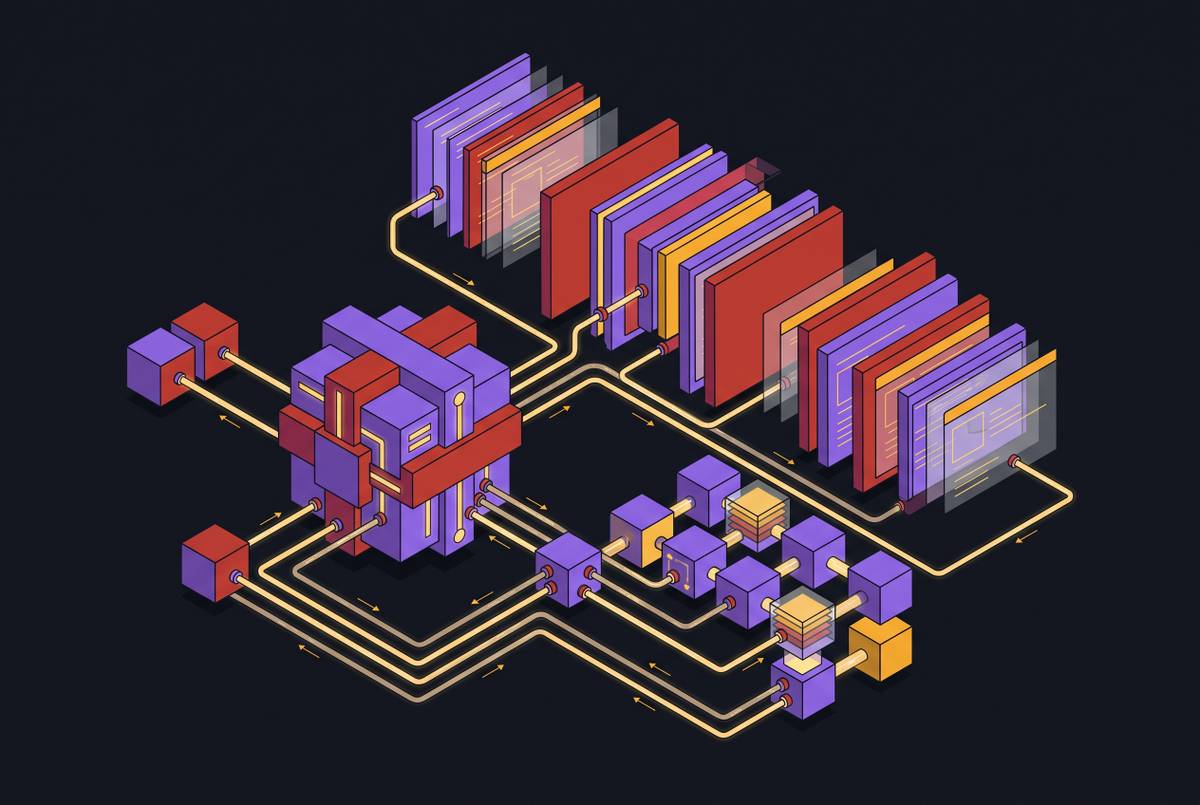
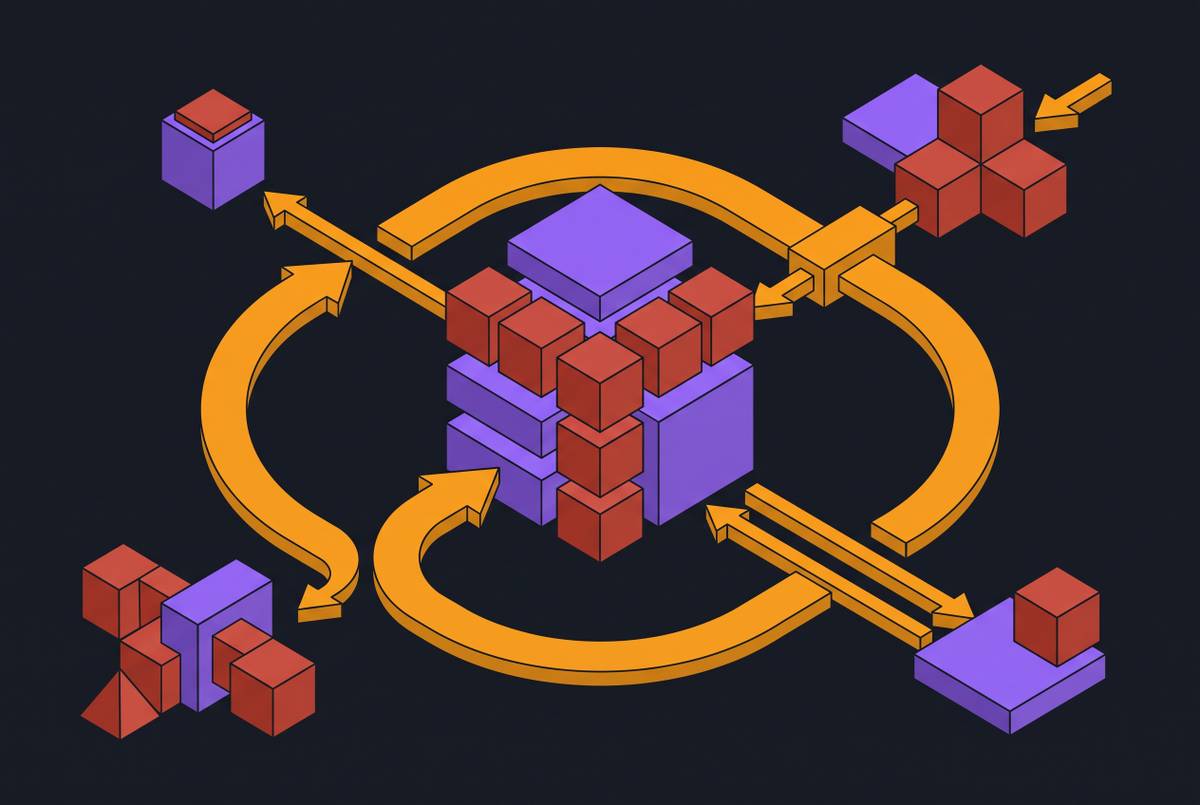
Enterprise AI deployments across industries, not just healthcare, are landing on the same architectural pattern, and it matters because it's converging independently across sectors with very different regulatory pressures. The pattern puts a deterministic workflow engine in the control plane and lets probabilistic AI operate as a bounded component inside that structure, rather than letting the model run the whole show.
In practice, the governed version of this looks like a pipeline: scoped inputs go into the model, the model does its probabilistic reasoning, but its output has to land in a structured format, a JSON schema, say, rather than free text. That structured output routes to a human approval checkpoint before anything executes. Only after approval does the deterministic engine actually run the action and generate a signed receipt.
Constraining a model's output to a schema does something specific: it forces the response into a predictable, machine-readable shape, which effectively resets what might be called the probability clock through inference-time conditioning. The model still reasons probabilistically, but what comes out the other end is a piece of structured data an enforcement layer can check, not an open-ended sentence it has to interpret.
AgenticRail's approach to the enforcement gate illustrates the principle well: the gate operates independently of the model itself. It reads the step identifier, the function being called, the action type, a nonce, and a timestamp. It does not read the model's reasoning, and it does not care how confident the model felt about its own output. Its decision comes down to two words: ALLOW or DENY. No confidence interval, no partial credit.
Where each planning mode fits in the specific administrative workflows healthcare practices run
The useful exercise here is mapping which parts of a given workflow belong to which mode, not picking a winner between deterministic and probabilistic planning. It's mapping which parts of a given workflow belong to which mode.
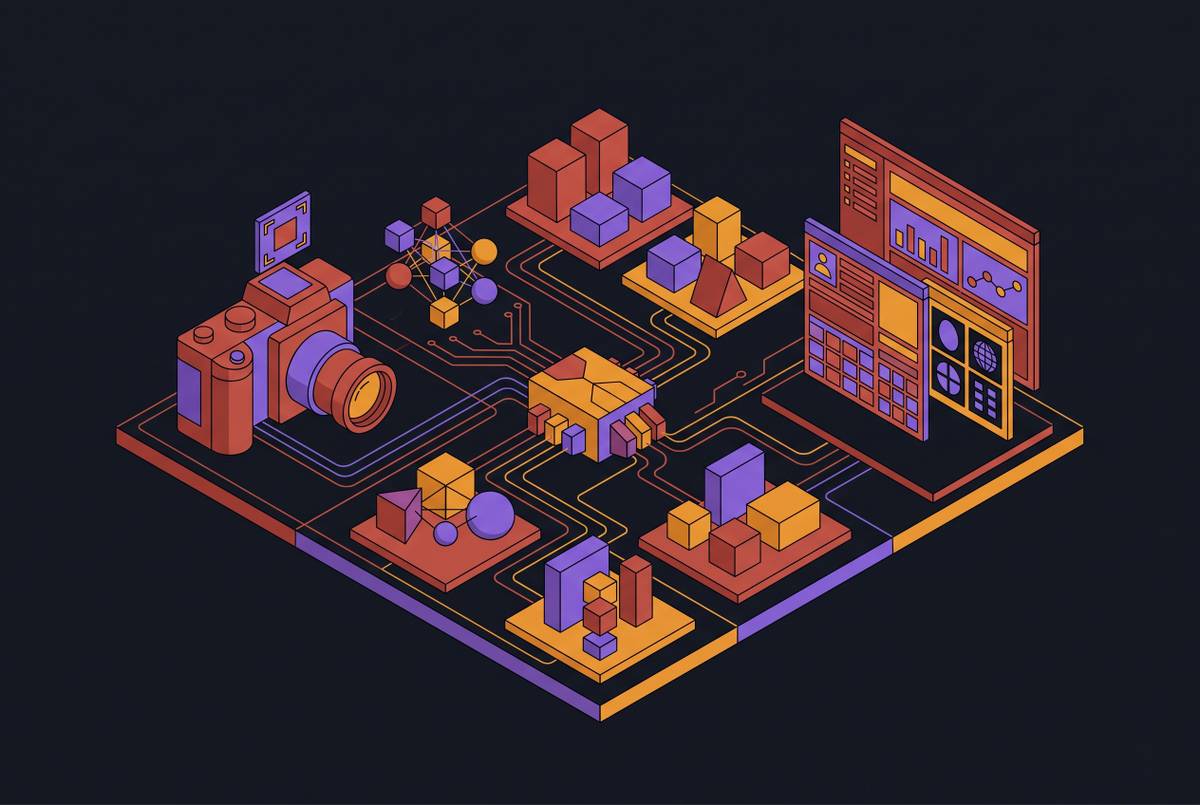
Prior authorization splits cleanly. The deterministic layer handles step sequencing, an eligibility check has to run before a clinical criteria lookup even starts, along with populating fields from structured data, navigating the payer portal, and capturing submission confirmation. The probabilistic layer earns its place interpreting unstructured payer clinical criteria documents, drafting appeal language when an initial authorization gets denied, and inferring which code combinations are likely to trigger additional review. The denial numbers show why getting this split right matters: 41% of providers reported denial rates above 10% in 2025, up from 30% in 2022. A workflow that silently skips a verification step because a probabilistic agent inferred it was done feeds that trend directly.
Claim denial appeals follow a similar logic. Deterministic execution should own routing denied claims by reason code, enforcing appeal deadlines that don't bend, and logging every action with a timestamped record that can't be argued with later. Probabilistic reasoning belongs in reading unstructured denial letters, drafting the actual appeal narrative, and identifying which policy exceptions in payer documentation might apply to a given case. Hospitals spent nearly $18 billion overturning denials in 2025, and appeal drafting is exactly the kind of task where probabilistic reasoning is worth the variance, provided it's operating inside a deterministic shell rather than running the whole appeal end to end.
New patient referral scheduling and cancellation recovery deserve a specific distinction from what most people picture when they hear "scheduling chatbot." A scheduling AI agent worth the name checks real-time provider availability, applies insurance eligibility rules, books directly into the EHR, sends confirmation, and schedules follow-ups. That's a different animal from a bot that answers "what are your hours?" The deterministic layer covers availability lookup, eligibility verification, EHR booking, and confirmation dispatch, steps that need to run in the same order and produce the same outcome every time. The probabilistic layer handles the messier parts: interpreting a patient's ambiguous scheduling request, handling the edge cases that show up in cancellation communications, and adjusting tone across different outreach touchpoints.
Why most healthcare agent deployments today are not yet architected this way
Most deployments in the field right now don't look like the hybrid model described above, and the gap isn't small. A large majority of organizations, 79% according to the 2026 Global State of IT Automation Report, have not adopted AI or LLM workflows at enterprise scale, largely because governance readiness and integration complexity haven't caught up to the ambition of the pitch decks.
Industry analysts have warned that a large share of agentic AI projects may be canceled before reaching production scale. The driver is that the hype around autonomous agents outran the governance infrastructure required to run them safely at scale, and projects built on that hype are running into the same wall one after another. It's that the hype around autonomous agents outran the governance infrastructure required to run them safely at scale, and projects built on that hype are running into the same wall one after another.
That reframes the problem correctly. This is not a capability gap. The agents that can draft an appeal letter, interpret a denial reason code, or navigate a payer portal already exist and already work, in the narrow sense of producing usable output. What's missing is the architectural layer that makes their actions provable after the fact, the receipt chain, the enforcement gate, the fail-closed default. Without that layer, capability without accountability.
Revenue cycle management is turning into the pressure test for this gap, and the pressure is coming from the other side of the table. Payers are already deploying AI systems that review and deny claims in seconds, at scale, continuously. Provider-side workflows that can't match that speed, and can't produce audit-grade evidence of their own decisions when a denial gets contested, are operating at a structural disadvantage that's only going to widen.
What healthcare operators should ask when evaluating agent vendors
Evaluating a vendor on outcomes alone, does it save time, does it reduce denials, misses the question that actually decides whether the deployment survives contact with an audit. The conversation needs to be about architecture.
On step enforcement: does the sequencing of steps happen inside the model itself, or through an enforcement layer that sits independently of it? When a step's preconditions aren't met, does the agent halt, escalate to a human, or just continue on its own inference? And critically, is the failure mode fail-closed, denying by default when something's uncertain, or fail-open, continuing forward with a warning that may or may not get read?
On auditability: is the audit trail a log of what the model says it did, or a cryptographic receipt of what actually executed? Can the vendor produce evidence that a specific step ran, at a specific time, with a specific input, not just a summary saying the workflow finished? And would that evidence actually hold up inside a HIPAA audit or a payer dispute, where the standard of proof is considerably higher than "the dashboard says it worked"?
On human-in-the-loop design: at what confidence threshold does the agent route a decision to a human instead of acting on its own? And is that checkpoint enforced at the infrastructure level, where the system physically cannot proceed without approval, or is it a suggestion the model can override if it decides the situation doesn't warrant it? Infrastructure enforcement versus model-level suggestion is usually where the real difference between vendors appears.
Sources
- Deterministic vs. Probabilistic: When to Use AI in Workflow Automation
- Deterministic vs. Non-Deterministic vs. Probabilistic AI in AppSec: Why the Distinction Is Now a Security Control - Cycode
- Are AI Agents Deterministic or Probabilistic? The Real Difference
- Deterministic vs. Probabilistic AI: Enterprise Workflow Guide
- mcmasterforum.org