Regression Testing Strategies for EHR-Integrated Agents
Layered evaluation and external triggers catch failures that code-based tests alone cannot detect.
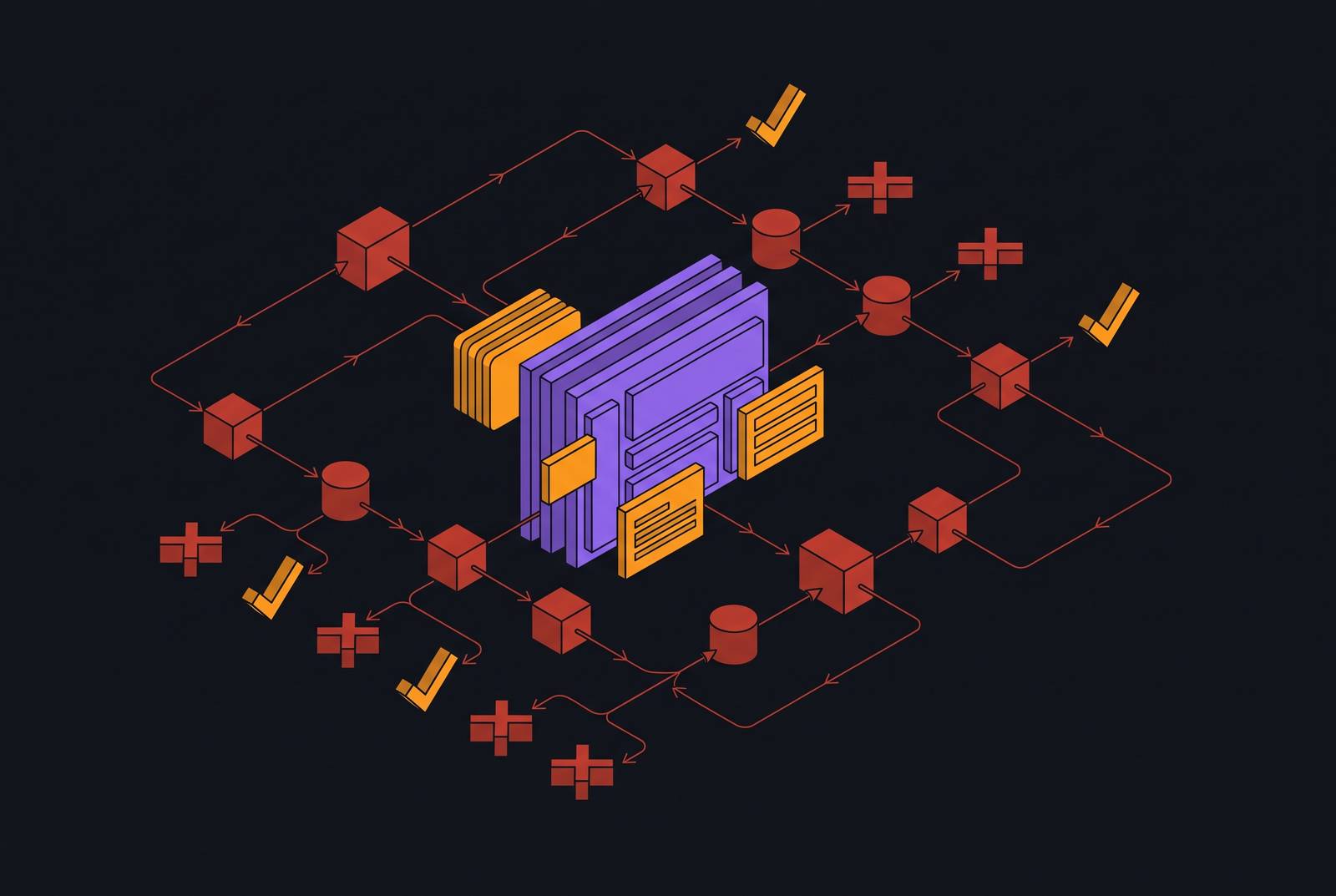
Regression testing for EHR-integrated agents must test how an agent sees, decides, and acts, as well as whether its software still runs. Because vendor updates and model changes can break workflows without an internal code change, reliability requires layered evaluation, external triggers, PHI-safe fixtures, and calibrated human review.
Why screen-operating EHR agents fail differently from API-based automation
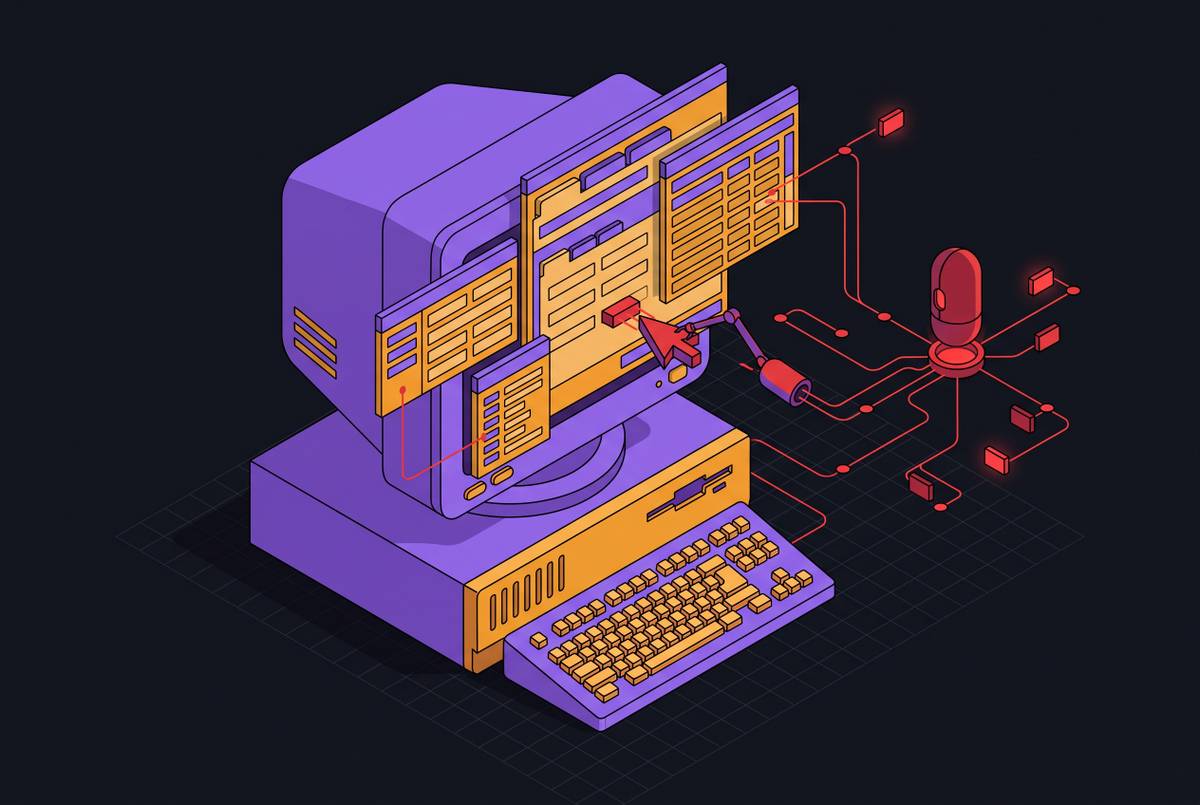
API-based automation depends on an interface contract. A changed endpoint, schema mismatch, or dropped field creates a discrete failure that can be traced to that contract. A screen-operating agent instead depends on its interpretation of a visible interface. A renamed button, repositioned field, or shift in color contrast can break its behavior without changing an API.
The screenshot-analyze-act cycle also means the agent works from a frozen view. In that frozen view, it cannot see UI changes or animations that happen mid-action. Non-determinism makes results harder to predict, because the same screen can lead to a different sequence of actions on each run. A single passing run therefore cannot establish reliability, and the testing strategy has to be built around perception and behavior.
The four failure modes that a screen-operating EHR agent produces in production
The first failure mode is visual misidentification. The agent reads the wrong field, button, or value and acts on that misreading. Small, low-contrast, and dynamically populated elements make this particularly relevant to EHR interfaces. The second is multi-step reasoning drift, in which an early mistake corrupts later decisions. An agent can reach the final screen and appear to finish while the submission itself is wrong.
The third failure mode is a post-update UI break. An EHR vendor repositions a button, renames a tab, or restructures a form, invalidating a previously successful navigation path. The fourth is behavioral drift after a model update. The model provider changes the model underneath, and the agent makes different decisions even though the application code and prompts stay the same. Static tests that mock model responses cannot expose that change because they continue to evaluate frozen behavior.
Why EHR update cycles make external-trigger regressions the dominant risk category
Internal release gates operate on the deploying team's schedule, but EHR changes do not. Standard CI/CD regression testing uses fixtures tied to a known interface state and fires when the team builds its software. A vendor update can introduce reordered fields or new mandatory inputs without activating that pipeline. The resulting gap is asymmetric, because production changes immediately while testing waits for the next internal build. If that build never happens, the first warning comes when the workflow fails.
Regression triggers must therefore be decoupled from code commits. Detected EHR UI changes should initiate post-update scans of previously validated paths and targets. Sandboxed EHR environments can help teams preview updates, but incomplete fidelity and unpredictable update timing limit their protection. They complement post-update scanning. External-trigger testing is consequently a baseline requirement for deployment against a vendor-controlled EHR.
How the testing stack has to be layered to cover all four failure modes
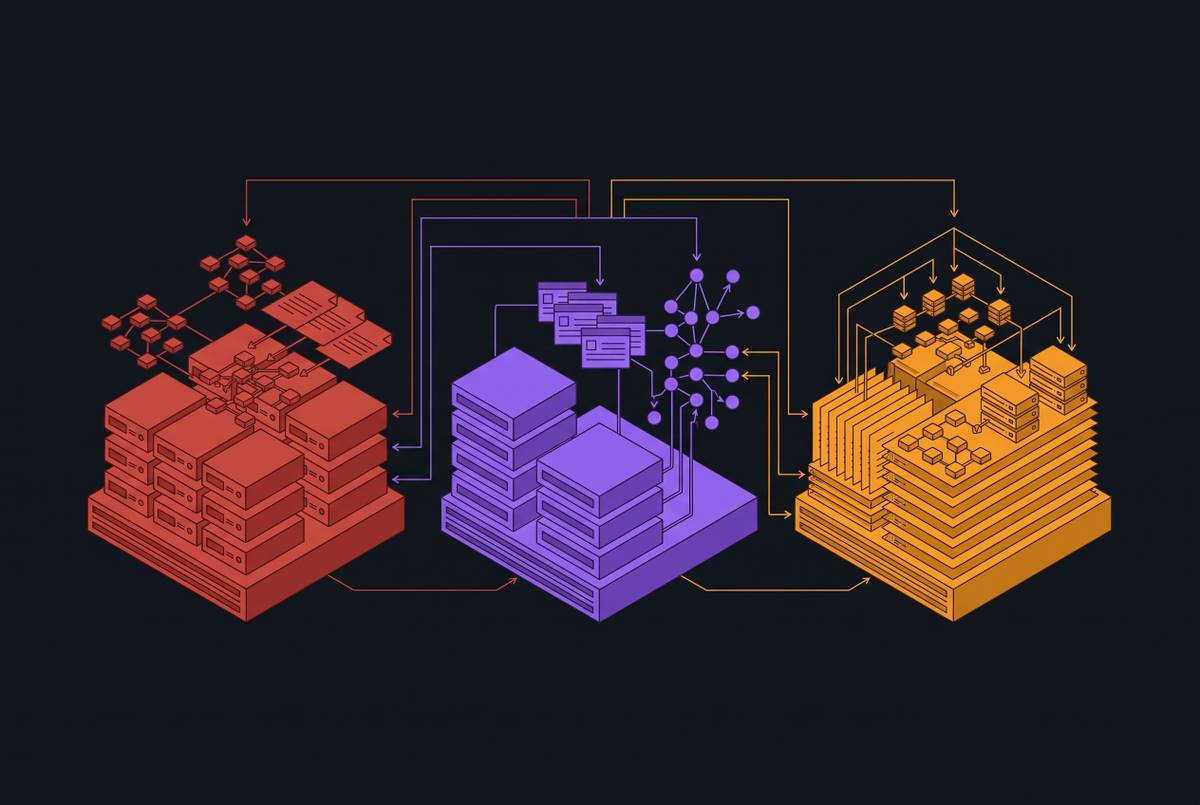
The first layer isolates individual decisions with deterministic mocks. Given a known screen state, it tests whether the agent selects the right action, while schema validation checks the structure of that action without demanding an exact output match. This catches local reasoning errors quickly, but cannot establish live-model or live-interface reliability. The second layer therefore runs complete workflows against curated scenario fixtures. It scores the tool choices, arguments, and populated fields along the way as well as the outcome, which helps reveal reasoning drift and changes in behavior caused by the model.
The third layer checks perception and navigation after detected UI changes. It tests whether validated field selectors, button targets, and paths still resolve, covering visual misidentification caused by changed screens and post-update breaks. The fourth layer observes production runs, where real inputs and between-build model changes reveal failures that fixtures miss. Confirmed incidents return to the scenario set as permanent regression cases. These layers form a loop, and omitting one leaves either isolated logic, complete behavior, changed interfaces, or live variation untested.
What evaluation tools cover which layers, and where the gaps are
Braintrust supports CI/CD-integrated evaluation workflows, while Promptfoo adds security and adversarial testing for risks such as prompt injection and jailbreaks. Both support build-gated evaluation in the first layer. For the second layer, Confident AI provides span-level trace evaluation and multi-turn simulation, making individual decisions inspectable. DeepEval and LangSmith support scenario-based benchmarking. Galileo addresses hallucination detection through purpose-built small models, reducing reliance on full model inference for that evaluation task.
Production coverage has a different emphasis. Arize Phoenix provides open-source trace monitoring and evaluation, AgentOps tracks production runs, and Confident AI's production loop converts incidents into benchmark cases. These functions support the fourth layer but do not replace the third. Post-update UI scanning needs specialized enterprise UI regression tools that have self-healing capability in addition to the agent evaluation tools. A separate gap concerns correction reuse, which Augment Code's Cosmos addresses by carrying evaluation feedback into team-wide agent memory instead of leaving a prompt correction in an engineer's personal configuration.
Trigger conditions that should fire a regression run for EHR agents
For internal changes, the decision is whether the proposed release still meets the behavioral baseline. Every code commit or pull request should activate the first and second layers, with threshold failures blocking merge. Prompt edits should activate decision checks and the full behavioral suite. Model provider updates also require the full scenario set, including updates made between builds that do not appear in the team's change log. Waiting for a code change would leave the actual source of drift untested.
For external changes, the decision follows the changed dependency. An EHR or payer portal update should immediately trigger UI scanning, prioritizing high-volume workflows including prior authorization, scheduling, and claim submission. A CMS or payer policy change instead calls for behavioral scenarios that test the changed requirements, denial reason codes, or submission formats. Each week, a review of production traces should send failures for review and turn confirmed issues into permanent fixtures. Pre-deadline runs should also validate new payer API surfaces before the January 2027 delivery gate.
PHI governance in test pipelines and what the 2025 HIPAA amendments require
PHI governance constrains both the test pipeline itself and the agent's production deployment. Using real or lightly anonymized patient records to make fixtures that reflect real cases creates a path for PHI to enter the testing infrastructure. That path can include temporary caches, inference pipelines, and fixture stores. Those systems still have to meet governance rules when they are called test environments. Realism in a fixture is not a substitute for lawful handling of the underlying records.
The 2025 HIPAA Security Rule amendments discussed here are proposed requirements, rather than a basis for treating every described change as an already-effective obligation. Their proposed removal of the “addressable” designation for encryption would make encryption of ePHI in transit and at rest mandatory across those paths. Compliance also depends on whether the required protections are in place, beyond whether anyone accesses a record improperly. Shared service credentials create a related attribution gap when an auditor needs to know which agent accessed a record and who authorized it. The practical design requirement is to use fixtures de-identified to HIPAA Safe Harbor standards and preserve agent-level accountability, rather than build testing around lightly anonymized production data.
How the dual-track FHIR-and-portal reality changes the regression surface through 2027
As payers accept prior authorization submissions through FHIR DaVinci PAS APIs and state-mandated electronic submission systems, some checks move from visual navigation to schema validation and resource conformance. During the overlap, though, agents must still work across FHIR and X12, portals and fax. A new API route does not make the older portal route safe to stop testing. Through at least the end of 2026, both tracks remain necessary.
The UI track covers portal navigation, form population, and document uploads for payers not yet on FHIR. The API schema track covers FHIR resource conformance, DaVinci PAS schemas, and X12 transaction format correctness. CMS-0057-F sets January 1, 2027 as the deadline for the FHIR electronic prior authorization API, so pre-deadline regression must serve as a delivery gate. It also sets standard decision timelines of 7 calendar days and expedited timelines of 72 hours, with a specific reason required for every denial. Checks of submission formatting and documentation therefore belong in the same workflow evaluation as checks of successful navigation, because a submission can reach its destination and still be wrong.
Where the validation bootstrapping problem sits and why human review cannot be removed from the loop
Agent-generated tests accelerate fixture and edge-case creation, but they do not establish their own correctness. Asking another agent to validate them can create a circular dependency. An AI grader needs a human-reviewed calibration set against which its judgments can be assessed. Anthropic's 2026 evals guidance calls for systematic human review calibrated against LLM graders for subjective production outputs.
AI graders can score thousands of traces, while people validate representative samples and convert confirmed failures into permanent cases. The live Hyperscribe deployment reported that 79% of initial feedback entries were error reports, with that share declining substantially as engineering interventions resolved failures. In EHR workflows, where a wrongly populated claim field or missed denial reason has revenue and patient-care consequences, staff also need outputs they can trace and verify.
What a production-ready regression program looks like for a multi-location practice or portfolio
Deterministic decision tests provide fast checks without PHI, while behavioral evaluation uses de-identified scenarios and human-calibrated grading. UI scans respond to EHR and payer portal changes, prioritized by workflow volume and revenue impact. The defining feature is not the number of tools but whether a failure becomes durable coverage.
Different templates, staff conventions, and payer mixes can make an agent fail at one site despite succeeding at another on the same EHR. The scenario set must therefore represent site-level variation alongside a canonical workflow. For PE-backed portfolios or those managed by a management services organization, fixture generation and trigger configuration should be centrally governed and templated. Site-specific parameters can adapt that common program without reconstructing it for every acquired practice.
The program must also follow the whole workflow across systems. EHR-only navigation checks leave payer portal changes and FHIR schema failures outside coverage, even when they affect the same submission. For administrators, complete coverage makes deployment KPIs monitorable and defensible before a silent regression becomes measurable revenue loss. Regression testing is therefore not a separate technical overhead. It is the operating mechanism that keeps the agent performing like a trained staff member across sites, systems, and update cycles.