Confidence Scoring and Uncertainty Quantification in Agent Action Selection
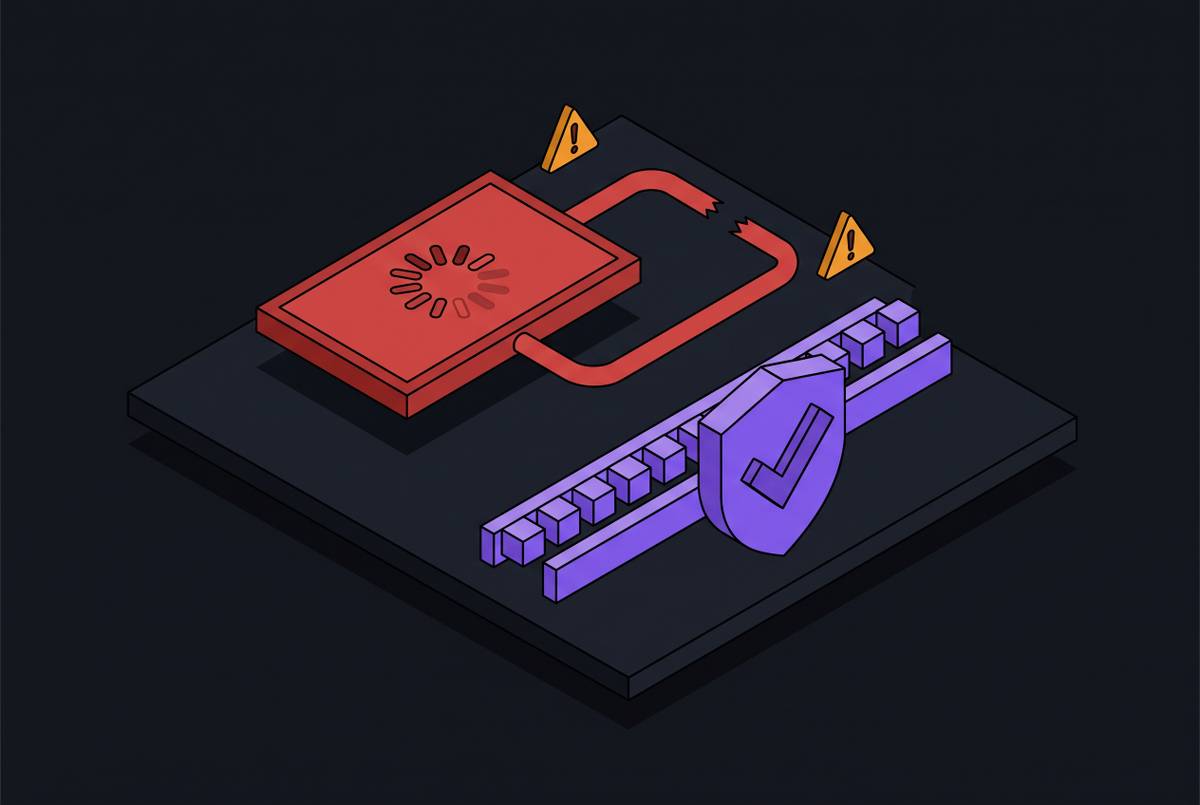
Agents must pause when uncertainty about early decisions could corrupt downstream actions.

Confidence scoring and uncertainty quantification in agent action selection govern when an agent executes, pauses, or escalates throughout a workflow. For healthcare operators, the deployment question is therefore not simply whether an agent can complete a task, but whether it can stop before uncertainty becomes a costly action.
Why confidence scoring in agents is a different problem than confidence scoring in chatbots
Single-turn uncertainty methods give a confidence score to one generated answer. An agent instead follows a trajectory, a sequence of decisions, tool calls, and interactions in which each step conditions the next. The relevant unit is therefore the chain of actions. A reliable-looking response can sit at the end of an unreliable process.
The consequences also extend beyond incorrect text. An agent can act before ambiguity is resolved, commit to an outcome that is difficult to undo, or modify a database, portal, or calendar that does not support rollback. In an administrative workflow, these actions change operational state. If an early mistake shapes later actions, the error can propagate before a system-level checker sees it. This is the conceptual break that makes chatbot-style confidence an insufficient basis for trusting an agent.
How the three families of uncertainty estimation work, and where each breaks down in agentic settings
The main scoring families use different signals: white-box probabilities, black-box consistency, and reflexive self-assessment. White-box scorers read token-level probabilities directly from the model, providing a granular signal at every generation step. But turning those probabilities into a score for an entire trajectory requires an aggregator. Bouchard and Chauhan’s 2026 study finds that the choice of aggregator substantially changes the resulting rankings. There is no canonical way to collapse those local probabilities into one trajectory-level judgment.
Black-box consistency scorers take a different approach by sampling the model repeatedly under stochastic decoding and measuring disagreement among the resulting trajectories. They require no access to model internals, which makes them applicable across systems. Bouchard and Chauhan find that this is often the strongest family overall, with trajectory-equivalence rate and action-set consistency typically ranking highest among its variants. But each estimate requires resampling full trajectories. The stronger signal therefore carries a meaningful computational cost.
Reflexive scorers ask the model to assess its own confidence or correctness without resampling or inspecting its internals. Bouchard and Chauhan find that these scores provide the strongest low-cost baseline in most evaluated settings. But self-reported certainty can make it hard to tell sound decisions from weak ones. In one benchmark model, verbalized confidence reaches 1.0 at the overwhelming majority of steps, capturing only a fraction of the signal available from token-level methods on the same benchmark. Self-assessment is therefore a useful starting point, but high-stakes action needs more than this one signal to be safe.
Bouchard and Chauhan also find that no family is uniformly reliable across models and domains. The choice depends on the model, task type, and computational budget. With any of these signals, systems still need to check how uncertainty grows across actions that depend on one another.
Why a confident early step can silently corrupt every step that follows
Step-level calibration does not imply trajectory-level calibration. Lin et al.’s 2026 taxonomy and empirical study shows this with a formal counterexample and results from tests across four models and trajectories up to 50 steps. Errors are coupled along the trajectory, so a confident wrong action can shape the conditions under which later decisions appear reasonable. Long tasks offer more opportunities for mistakes, any one of which can become the premise for subsequent work.
Consider an agent that misidentifies a payer’s requirements at step 3 of a prior authorization workflow. It then extracts documentation, formats the request, and submits on the basis of that misreading. Each later action can be correct conditional on the wrong premise. Per-step confidence checks can therefore approve the sequence without catching the first error before denial. Confidence in carrying out a plan is not evidence that the plan rests on the right requirements.
Lin et al. introduce TC-ECE, or Trajectory-Checkpoint Expected Calibration Error, to evaluate calibration at multiple points, including the end. Their study also finds that taking an average across trajectories can hide overconfidence in later steps. A system that appears well-calibrated in aggregate may be systematically overconfident by step 30 when results are separated by trajectory horizon. Operators therefore need checkpoints throughout the workflow, before a propagating error reaches an irreversible action.
The confidence-gated dual-process loop: how the control layer is actually structured
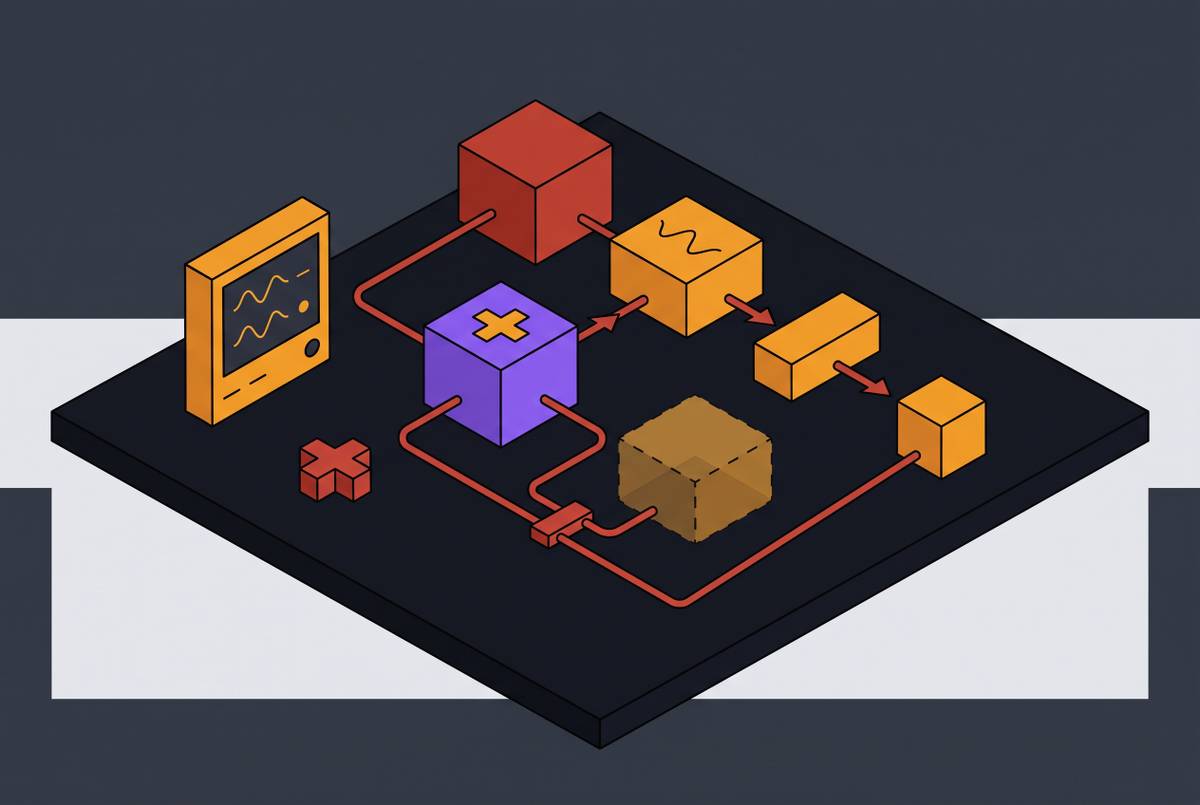
When self-evaluated confidence clears a reliability threshold, the agent executes through the fast path. When confidence falls below that threshold, it activates a slower review process before acting. The threshold is empirically calibrated on validation data, with the effective range between 0.8 and 1.0 depending on the task and model.
The slower path has four planned responses, namely abstention, clarification, deferral, and re-planning. Abstention means declining to act when a wrong action would cost more than inaction. Clarification asks a user or another agent for missing information, while deferral hands the decision to a human operator or specialist. Re-planning revises the upstream plan when the trajectory itself is compromised. These responses serve different uncertainty types, so treating them as interchangeable fallbacks would weaken the control design.
Evidence-retrieving tools, including search and lookup, can induce overconfidence because finding a result can make the agent more certain than the evidence warrants. Verification tools can instead correct that overconfidence. The control layer must therefore account for tool type rather than interpreting every tool result as a reason to proceed. A lookup and a verification step do not provide the same basis for action.
What the control layer looks like when the agent operates through a screen, not an API
Computer-use agents must assess both what they are seeing and what action that observation warrants. These are perception uncertainty and action uncertainty, and they are not independent. Lin et al. put perception-heavy surfaces in their own category in their taxonomy. For an agent operating through screenshots, the quality of the observation depends on UI state, rendering, and timing. An uncertain reading of the screen can therefore compromise an otherwise reasonable action choice.
A screenshot captures a static frame rather than real-time animation or rapid interface changes. Small or low-contrast elements can be misidentified, and each action requires a full screenshot-analyze-act cycle. The agent cannot see intermediate UI states during a single action. OSWorld shows how hard this still is even under controlled conditions. Frontier agents have made dramatic gains on the easier verified tier by mid-2026, but performance on the harder OSWorld 2.0 remains far lower, and human performance still leads by a meaningful margin.
In healthcare operations, a workflow spanning an EHR, a payer portal, and an intake form crosses different screen environments. Each has its own rendering, session timeouts, and dynamic elements, so every move between them brings fresh perception uncertainty. The gate must check that uncertainty before allowing the next action. When the screen state is unclear, the appropriate response is to pause, request a fresh screenshot, apply verification, or escalate to a human who can confirm it.
How multi-agent pipelines change the confidence problem: uncertainty at hand-off points
In a pipeline where different agents handle scheduling, intake, and prior authorization, the output from one agent becomes the input to another. Uncertainty travels with that output even when the next agent is confident about its own task. A threshold calibrated for a single-agent task can therefore underestimate pipeline risk. The boundary between agents is a point where uncertainty must still be controlled.
Oh et al. identify “uncertainty of heterogeneous entities” as one of the four core technical challenges in agent uncertainty quantification. An output from another agent or an external tool has a different underlying distribution from the receiving model’s own generations. Standard uncertainty estimators are not designed for that difference. Confidence in interpreting an incoming result cannot simply substitute for confidence in how that result was produced.
Explicit confidence checkpoints are therefore needed at every inter-agent boundary as well as within each action loop. A low-confidence upstream result should trigger deferral before a downstream agent executes on it confidently. The revenue cycle example is direct. If an authorization agent produces a low-confidence match against payer criteria, the submission agent should not treat that match as certain.
Why the hybrid model — agents handle high-confidence cases, humans handle exceptions — is the practical deployment architecture
Agents handle encounters above the threshold, while specialists handle exceptions that need clinical or payer judgment. This boundary is a deliberate design choice rather than merely a concession to current capability. This sends uncertain work to someone who can make the decision, keeping the agent from guessing.
Prior authorization makes the boundary concrete. An agent can read the EHR, extract clinical evidence, match it against payer criteria, and submit a request. But the criteria match must be certain enough for autonomous submission, or a clinician should review it first. CMS requirements that came into force in 2026 require payers to provide a specific reason for denial and establish maximum decision timeframes, measured in hours for expedited requests and days for standard requests. Beginning January 1, 2027, payers must implement prior authorization APIs.
Those time constraints make the timing of human review consequential. A low-confidence submission followed by denial consumes part of the allowed decision window, making review before submission cheaper than the appeal cycle afterward. Practice administrators therefore need to know where the threshold is set, how it is calibrated to their payer mix and case complexity, and who receives an escalation. A threshold that is too high reduces throughput without meaningfully improving accuracy, while one that is too low creates denials, rework, and downstream staff intervention. Calibration is an ongoing operational decision.
What operators need to ask before deploying agents in high-stakes administrative workflows
Before go-live, operators need evidence that the control layer is suitable for the work it will replace. The first requirement is the confidence threshold and the validation evidence behind it. A threshold derived from similar workflows and payer mixes provides a different basis for deployment from a default setting. Operators should also find out whether the system reports step-level confidence, trajectory-level confidence, or both. Per-action reporting alone may conceal the late-trajectory overconfidence that checkpoint-based evaluation is designed to expose.
The next requirement is a clear account of what happens below threshold and how quickly it happens. Abstention, clarification, deferral, and re-planning have different operational effects, and escalation speed matters in time-sensitive authorization work. Operators also need to find out how confidence is handled at inter-agent hand-offs, where upstream uncertainty could otherwise go unnoticed. For computer-use agents, the evaluation must extend to perception uncertainty from misidentified elements, session timeouts, and dynamic content. It must identify the escalation path when screenshot-level ambiguity cannot be resolved programmatically.
An administrative agent’s value depends on whether its control layer pauses, double-checks, or asks when trained staff would do so. Operators should be able to verify that behavior from their own workflow data before treating autonomous execution as dependable.
Sources
- Uncertainty Quantification for LLM Agents: A Taxonomy, an Evaluation Protocol, and an Empirical Study
- Beyond Single-Turn Confidence: Trajectory-Adapted Uncertainty Quantification for LLM Agents
- Uncertainty Quantification in LLM Agents: Foundations, Emerging Challenges, and Opportunities
- OSWorld-Human: Benchmarking the Efficiency of Computer-Use Agents