Graceful Degradation Patterns for Healthcare Agents
Healthcare agents fail silently mid-workflow, requiring new reliability patterns.
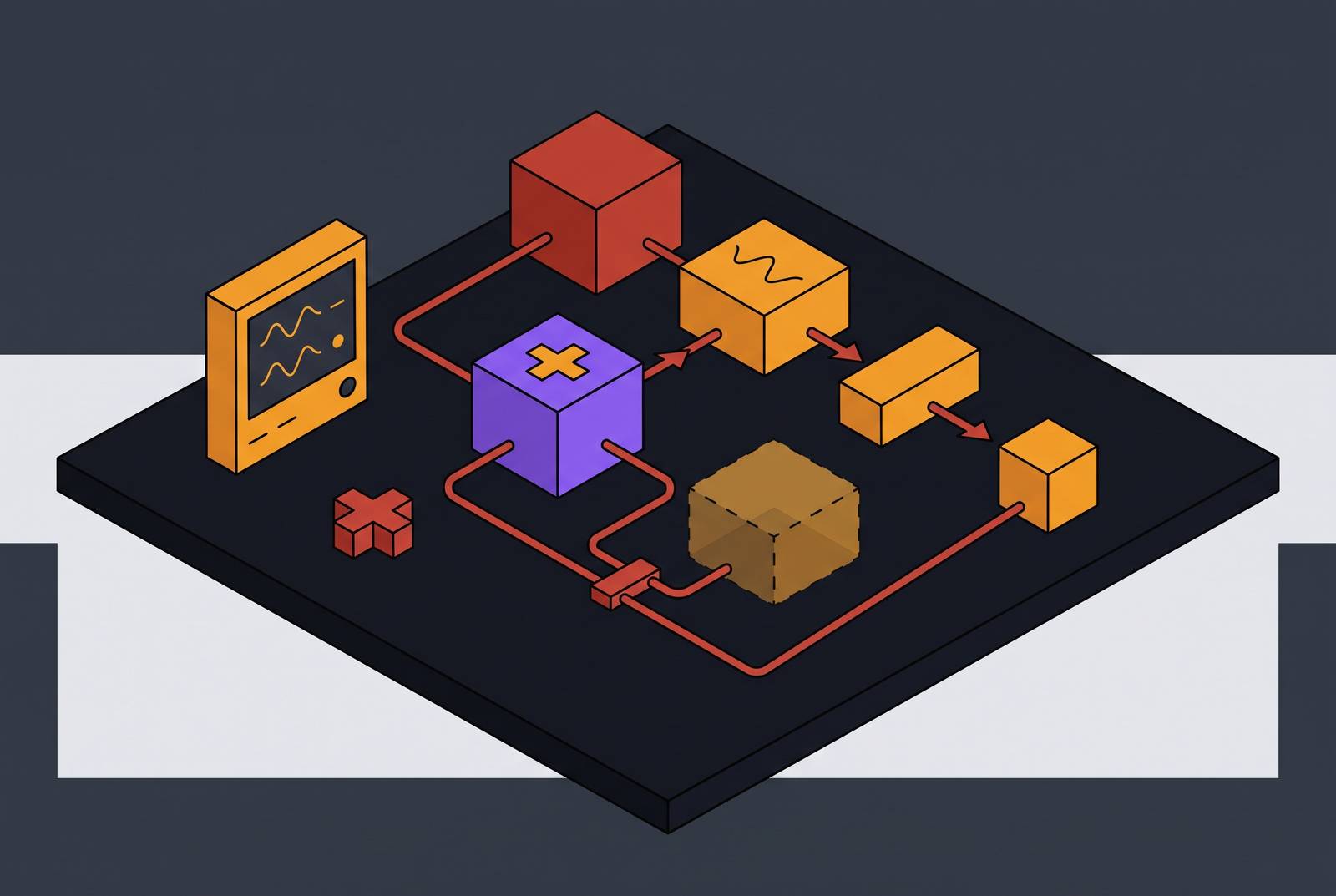
Healthcare AI agents fail probabilistically, in the middle of a workflow, and often without anyone noticing until the consequence appears somewhere else. That changes what reliability engineering has to mean for anyone deploying agents into prior authorization, referrals, claims, or appeals.
Why healthcare agents fail differently from traditional software
Traditional software fails at clean edges. A process crashes, a server returns an error status, a null pointer throws an exception, and a log entry marks the moment it happened. Engineers built decades of error-handling around that model: catch the exception, log the stack trace, alert on the status code. An LLM-backed agent breaks that model at its foundation: its failures don't look like failures. They look like output.
Four failure modes follow from this, and none of them has a real analogue in classical distributed systems. The first is non-determinism: the same prompt can succeed on one run and trip a content-policy rejection on the next, with no code change and no environmental difference a monitoring dashboard would catch. Retry logic built for network blips doesn't know what to do with a failure that isn't transient in the usual sense but also isn't permanent.
The second is slowness without a clean timeout. Model providers rarely fail fast. A request can hang for a minute or longer before anything resolves, and every downstream step waiting on that response sits idle the whole time. A system designed around millisecond API calls has no good instinct for a dependency that might simply take a long time to not answer.
The third, and the hardest to catch, is semantic failure. The API call returns a 200. The response is well-formed JSON. Nothing in the transport layer complains. But the content is wrong: it's structurally invalid for the downstream parser, contextually mismatched to the task, or internally inconsistent in a way no status code will ever flag. The system has no idea it just failed, because nothing in its monitoring stack checks for correctness, only for completion.
The fourth is cascading context corruption. If a tool call early in a multi-step reasoning loop goes bad, it can poison everything built on top of it. An agent eighteen steps into a workflow can be executing with total confidence on a premise that was wrong since step three, and nothing about its tone or structure will betray that. Research on production multi-agent systems puts failure rates at 41 to 86.7% when deliberate fault tolerance isn't built in, a range wide enough to make clear that resilience engineering isn't a secondary concern bolted onto agent design. It carries as much weight as the reasoning logic itself.
What a mid-workflow failure breaks in a healthcare practice
A crashed screen is recoverable because everyone can see it crashed. A mid-workflow agent failure in a healthcare back office doesn't announce itself that way. It produces an artifact that looks almost finished and sits there, unresolved, until a deadline or a denial forces someone to notice.
Picture a prior authorization pipeline that reads the clinical documentation correctly, drafts a compliant letter to the payer, and then never submits it to the payer portal. Nothing crashed. The letter exists. The clinical reasoning behind it is sound. But the authorization is stuck in limbo with no record anywhere of why it stopped short, and no alert telling staff that a patient's treatment is now waiting on a submission nobody made. The same pattern plays out with a referral: the order gets created correctly inside the EHR but never makes it to the receiving practice's scheduling system, so a patient believes a referral is in motion while nothing downstream knows it exists.
What makes this worse than a conventional software bug is the gap between "the agent ran" and "the work completed." That gap stays invisible without someone deliberately tracking state at every step, and a realistic revenue cycle workflow has many steps to lose track of: an eligibility agent, a coding agent, a prior authorization agent, a claims-status agent, a denial-management agent, and an appeals-drafting agent can all touch a single patient encounter in sequence. Each handoff between them is a place where a task can look complete from one agent's point of view and incomplete from the practice's.
Administrative overhead already takes up a large share of total healthcare spending, and that is the exact inefficiency agent deployments are meant to fix. A failure that quietly recreates the manual labor the agent was supposed to eliminate doesn't just waste the deployment. It can leave a claim aging silently in a queue, a denial appeal unassembled before a payer's response deadline, or a patient's authorization sitting unresolved with no one aware it needs attention. One claims appeals workflow from a major health system shows what success looks like: an agent reads a denial letter, assembles corrected documentation, and routes the package for nurse approval, cutting a process that normally takes 15 to 16 days down to one or two. The design question that matters is what happens if the assembly step fails after the denial letter has already been read and the clock is still running. Regulated domains add a further layer: when a fallback path doesn't exist, failing to build one can be read as negligent design, and every path the system can take, whether the agent's own reasoning or a human fallback, has to leave an auditable record of what happened and when.
The computer-use layer adds a failure surface that API-centric thinking misses
Prior authorization and claims work rarely happen through clean APIs. Much of it still runs through payer portals and EHR screens. A class of agents has emerged that operates those interfaces visually rather than through structured data exchange, and that class carries its own failure profile, distinct from both traditional screen-scraping automation and pure API integration.
A computer-use agent analyzes a live web page the way a person would: it reads labels, reads context, and decides where to click or type based on meaning. When a payer's PA form asks for the prescribing physician's NPI, the agent recognizes that field by what it says, not by its position on the page. That's the source of its resilience advantage over older robotic process automation. Script-based RPA tracks exact page coordinates or element paths, so when a payer redesigns a portal layout, every script built against the old layout breaks, and someone has to rebuild it. If a team works with dozens of payer portals each week using script-based tooling, they end up maintaining a separate script for each one, and every interface change forces fresh maintenance work. Computer-use agents sidestep that specific failure by interpreting intent rather than memorizing layout, but interpreting intent introduces failure modes of its own.
A portal session can time out in the middle of a form after the agent has already entered part of the data, and whether that partial entry persisted on the payer's side is often impossible to know without navigating back in to check. A visual misread, such as selecting the wrong value from a dropdown or misreading which field corresponds to which label, can submit successfully at the transport level (the portal returns a normal HTTP 200) while recording the wrong clinical data. And a portal redesign can change not just where a field sits but what it means: a field the agent correctly filled with an NPI in the past might now collect a different identifier, and the agent will fill it just as confidently, and just as wrongly, as before.
Regulatory change is coming for some of this traffic. A federal rule is tightening prior authorization timelines: it sets 72-hour decision windows for urgent PA requests and 7-calendar-day windows for standard requests starting in 2026, and it requires standardized, machine-readable Prior Authorization interfaces from impacted payers starting January 1, 2027. That will eventually move a meaningful share of this traffic onto structured, machine-readable paths. Until then, a large volume of prior authorization and claims work still runs through portal interfaces, and the failure modes described above remain live, operational risk for as long as that transition period lasts.
Multi-agent PHI exposure at every handoff
Most HIPAA guidance written for AI assumes a single agent talking to a single vendor. A real revenue cycle workflow rarely looks like that. It can route protected health information through half a dozen specialized agents in sequence, eligibility, coding, prior authorization, claims-status, denial-management, appeals-drafting, and each one of those handoffs is simultaneously a place where the workflow can break and a place where PHI can be exposed.
Each agent in that chain may be hosted by a different vendor or a different model provider, and under HIPAA, each one is a Business Associate the moment PHI passes through its infrastructure. That accountability doesn't stop at the agent layer. It reaches every vendor in the inference pipeline behind it: the model host, the API gateway, the vector database, the observability platform logging the agent's activity. If PHI moves through its systems, each of those needs a valid contract in place governing how it handles that PHI. Research on agentic AI governance in healthcare finds that structured governance programs outperform generic AI risk management specifically on credential revocation, tool-call logging, and PHI minimization, which happen to be the three controls most directly tied to what goes wrong at a multi-agent handoff.
The practical risk occurs the moment an agent fails mid-handoff. The failure state itself can contain PHI: a partially assembled appeals document, a denial letter the agent retrieved but hasn't finished processing, a context window still holding a patient's clinical history. A degradation path that routes that failure state somewhere uncontrolled, an unmonitored log, an ungoverned fallback model, a retry against a different provider with no BAA in place, turns an operational failure into a compliance failure in the same instant. Designing for graceful degradation in healthcare means designing for where that state goes when a step breaks, not just whether the workflow eventually finishes.
The five-rung degradation ladder
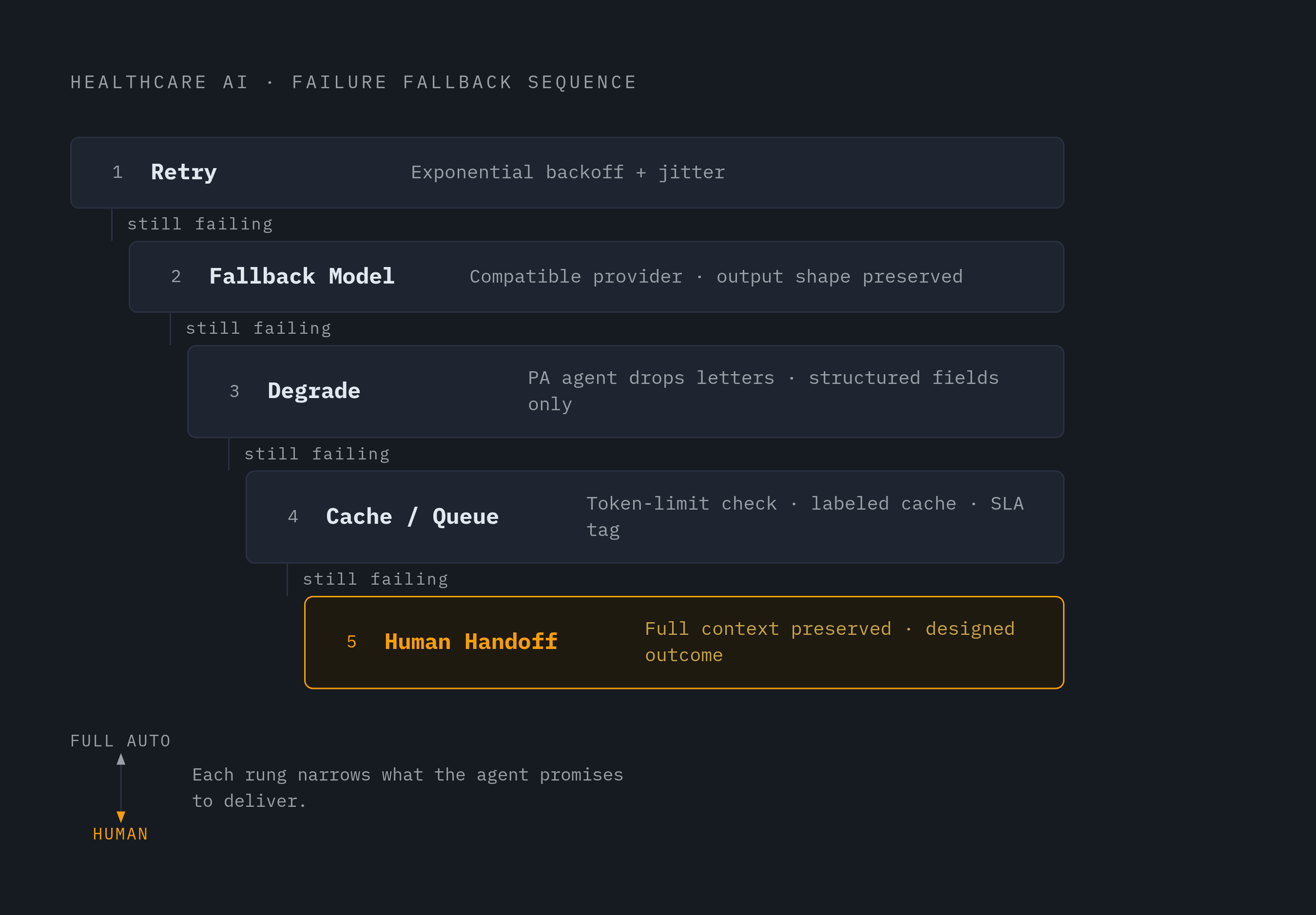
Graceful degradation is a sequence of fallback positions, tried in order, each one narrowing what the system promises to deliver until it either completes the task at reduced ambition or hands the work to a person. Five rungs make up that sequence, and each one has a specific translation into prior authorization, referral, and claims work.
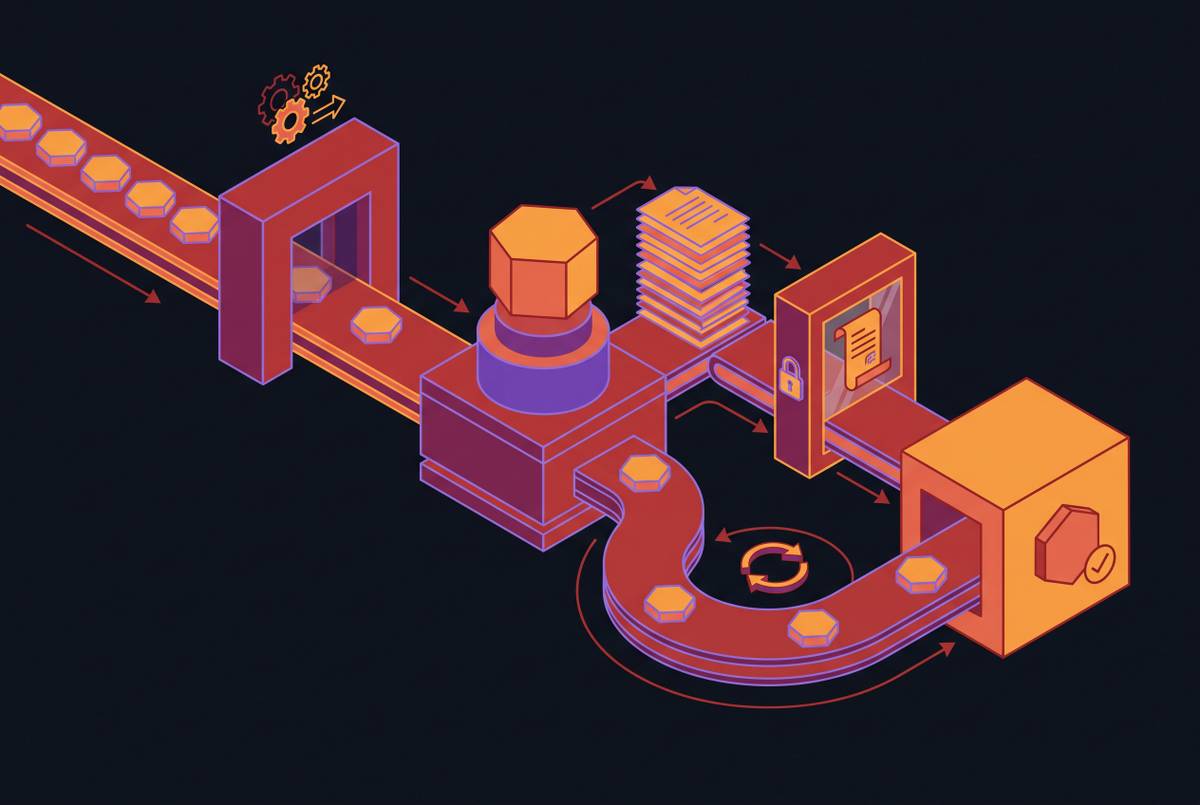
The first rung is a brief retry, reserved for failures that are genuinely transient: a network blip, cold-start latency, a payer portal that's briefly unreachable. Production deployments converge on the same pattern here: a short base delay, exponential backoff with jitter, and a hard cap on the number of attempts before the system steps down to the next rung. Without jitter, every agent that hits a rate limit at the same moment retries on the same schedule, and that synchronized retry storm can make the original failure worse in a multi-agent system. In a healthcare context, retrying has a cost beyond compute: if a user has already waited once, an optimistic retry just extends that wait, so retries should only fire when there's a real chance the same path will succeed the second time.
The second rung switches to a compatible fallback while preserving the same workflow contract. That usually means stepping from a primary model to a secondary model from the same provider, then to a different provider entirely, then to a cached response, with rate-limit errors skipping straight to the next tier. The hard part here is behavioral consistency: a workflow tuned against one model's output format can break downstream parsing the moment a smaller fallback model returns something structurally different, even if the content is reasonable. The fallback has to preserve the shape of the output, not just keep some model generating tokens. Provider-level isolation also matters: if one provider starts rate-limiting, that backpressure needs to stay contained to that provider's worker pool so agents running against other providers keep operating normally. One healthcare-specific rule belongs at this rung without exception: authentication errors, 401s and 403s, should never trigger a retry. They go straight to a human. A credential failure inside a payer portal session can mean the session has been compromised, not that something glitched.
The third rung is intentional capability reduction, used when the available fallback is simply weaker than the primary path. Many teams get this rung wrong: they switch to a weaker model but keep the original promise intact, so the fallback either fails outright or produces output that breaks whatever comes next in the pipeline. A PA drafting agent at reduced capability should stop generating full narrative letters and instead extract and populate only the structured fields it can verify, flagging the narrative sections for staff to write by hand. A referral agent should stop trying to confirm appointments autonomously and instead generate a structured referral packet for staff to submit themselves. A claims agent should move from autonomous submission to read-only diagnosis, surfacing what it found and queuing the action for a person to take. None of that is a failure if the system states clearly what it has stopped doing and why. It becomes a failure only when staff discover the gap after the fact, with a deadline already missed.
The fourth rung serves cached or queued work when real-time processing isn't available at all, whether from an extended outage, a context window overflow, or exhausted quota. Estimating token count before a request goes out heads off the most disruptive version of this failure: well under the limit, proceed as normal; approaching the limit, compact the context first; at or near the limit, refuse the call and reduce context aggressively rather than sending a request likely to fail mid-stream. A PA request that can't be processed immediately should land in a queue with a clear service-level target attached to it, so staff know the request is pending. Anything served from cache needs a visible label saying so. A cached eligibility check from 48 hours earlier may no longer reflect a patient's actual coverage, so the system has to surface how old that cached data is, not just hand it over as if it were current.
The fifth and final rung is a clean handoff to a person, reserved for cases where getting the answer right outweighs getting it fast: ambiguous clinical questions, prior authorization decisions that require judgment calls, denial appeals where the reasoning chain can't be verified with confidence. Human review at this rung is the designed outcome for exactly the cases where an agent can't reliably finish the job on its own, and building that handoff cleanly, with the full context intact and nothing lost in transit, is what separates a system that degrades gracefully from one that simply stops.