EHR Complexity Management Platforms Compared
Three architectural approaches compete to reduce healthcare's crushing administrative burden.
Administrative complexity in a modern medical practice is structural: completing a single patient encounter requires staff to move across the EHR, payer portals, fax workflows, and scheduling tools, and each new payer relationship or added workflow multiplies the fragmentation across those systems. Clinical staff switch between a large number of applications over the course of a single shift, and that switching is what any serious investment in EHR complexity management is meant to solve. For every hour a clinician spends with a patient, nearly two additional hours go to EHR data entry and paperwork, a ratio that explains why so much capital is now chasing administrative automation in healthcare. Practices asking for help with this are not asking for a new EHR. They want something that sits across the systems they already use and removes the manual handoffs between them.
What an EHR complexity management platform means in 2026
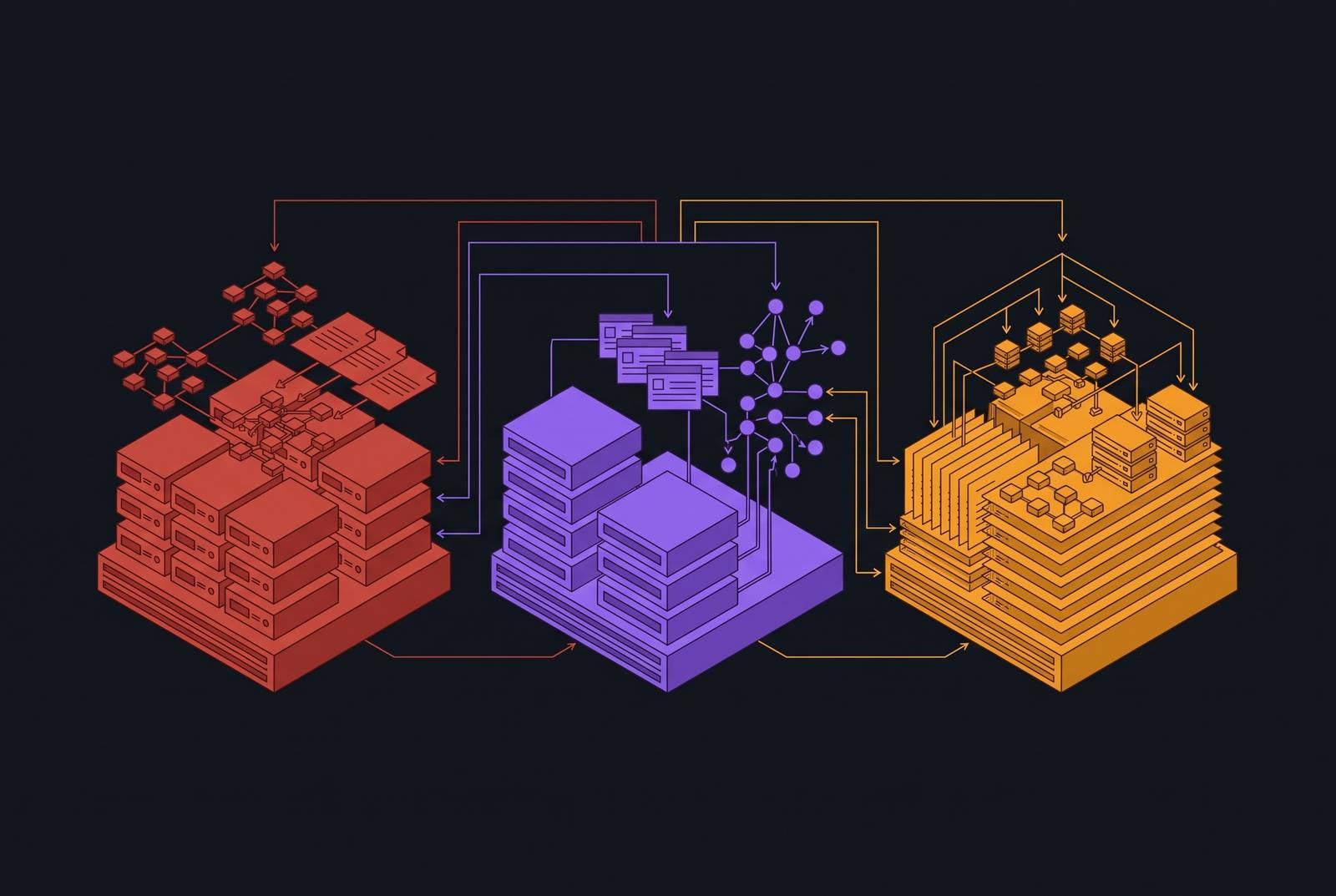
The phrase "EHR complexity management platform" gets applied to at least three architecturally distinct products, and treating them as interchangeable is how a practice ends up buying a tool that solves the wrong problem. The first approach is the native EHR module: AI capabilities built directly into the EHR itself, which requires the practice to already run that vendor's system. First Choice Neurology used AI capabilities built into eClinicalWorks, and it cut workflow complexity by roughly nine clicks per task, a real gain, but one that only works inside that single environment. A native module does nothing for the moment a staff member has to leave the EHR for a payer portal or a third-party scheduling tool.
The second approach is the API-integration platform, including most RCM automation layers, which connects to EHRs and payer systems through structured data APIs. This only works where every system in the workflow exposes a compatible, maintained API, and it breaks when a payer changes its portal UI or authentication requirements. ONC's HTI-1 Final Rule mandates FHIR R4 API support for certified health IT, and HTI-4 adds FHIR-based criteria aimed at electronic prior authorization, though its primary focus is e-prescribing and real-time prescription benefit standards. These rules push the industry toward this approach for certified systems. But adoption is uneven, and real-world platforms still need a lot of manual mapping and data transformation to work.
The third approach is the computer-use agent, or CUA: software that operates an interface the way a person does, reading the screen, clicking, typing, and navigating, without needing API access or any EHR-side configuration. Stanford's HealthAdminBench introduced the first benchmark to evaluate CUAs on end-to-end administrative workflows, built across four realistic GUI environments, an EHR, two payer portals, and a fax system, with 135 expert-defined tasks spanning prior authorization, appeals and denials management, and DME order processing.
What separates these three categories is not feature depth but who bears the integration burden. A native module requires the right EHR. An API platform requires exposed, maintained APIs on every system in the chain. A computer-use agent requires a login. That question, who has to do the integration work, is the one to keep in mind through every comparison that follows.
How the interoperability approach shapes what a platform can automate
The interoperability architecture a platform chooses is not a technical footnote. It sets the outer boundary of what that platform can actually automate: a tool can follow a workflow across every system it touches, or it stops cold at the edge of the one system it was built for.
Prior authorization makes the point sharply. The workflow starts in the EHR, where staff pull chart notes and diagnoses, moves to a payer portal to submit the request and track its status, and frequently routes through a fax or phone step before it closes out. No single-system tool completes that chain end to end. The average physician handles roughly 40 prior authorization requests a week, which eats about 13 hours of staff time, and when this process stalls, patient care stalls with it. If a payer changes its portal layout or adds a new multi-factor authentication step, an API-dependent platform breaks. A computer-use agent reads the portal visually, so that same change doesn't stop it.
Denial management runs the same cross-system path: reading the denial in the EHR or clearinghouse, researching the payer's stated reasoning on its portal, assembling the appeal, and routing it for approval, a chain that typically touches four or more separate systems before it's resolved. Scheduling and referral intake follow a similar pattern, crossing the EHR, an external referral portal, and sometimes a phone or fax channel; native EHR automation can only ever handle part of that workflow.
The practical consequence is that a tool automating one step of a multi-system workflow still leaves staff doing the handoffs between steps, and the handoffs are where most of the lost time actually sits. HealthAdminBench's findings back this up directly: AI agents perform well on isolated subtasks but frequently fail to complete full end-to-end workflows, and that gap between subtask success and full-workflow completion is the one that matters most once a platform moves from pilot to production.
What to require from any platform before comparing features
Any platform touching protected health information across EHRs and payer portals has to clear a compliance floor first. HIPAA compliance and a signed Business Associate Agreement are the starting line, not a differentiator. If a vendor won't provide a BAA, it should be disqualified before you even talk about features.
SOC 2 Type II certification matters because it is independently audited, and it covers the security controls protecting data both in transit and at rest across a platform's infrastructure. Auditability is the requirement most buyers underweight. If an AI-accelerated prior authorization decision is ever questioned, the platform's logs need to prove that a licensed clinician reviewed the AI's recommendation before it was submitted. A black-box LLM endpoint cannot provide that proof. If a platform is properly implemented, it builds in audit-grade logging of every AI action and human review decision, confidence threshold controls, and explainability from the start of the architecture, not bolted on afterward.
Sub-processor scrutiny belongs in this same filter: which third-party LLM providers touch PHI, does each one sign a BAA, and what is the data retention policy. Zero-day LLM retention is the standard worth pushing vendors toward. For computer-use agents specifically, you need a log of every screen interaction the agent takes, with screenshots or video replay, both for compliance documentation and for quality assurance of the agent's own actions. HealthAdminBench establishes that CUAs operating across EHR and payer portal GUIs need to produce a verifiable action trail, and that same standard carries over directly into production deployments. Clearing this compliance floor is the price of entry into the comparison that follows, not a basis for choosing between the platforms that clear it.
Novoflow: computer-use agents that operate across every system in a workflow
Novoflow deploys computer-use agents that interact with a practice's EHR, payer portals, and third-party tools the same way a human staff member would, reading screens, clicking, typing, and navigating between them. Because the agent works at the interface level rather than through an API, it can follow a workflow wherever it goes, and you don't need API access or any EHR-side reconfiguration.
Setup requires only a single staff-account login. There is no API integration project, no EHR-side configuration, and no IT engagement demanded of the practice. Novoflow's AI forward-deployed engineers map a practice's existing standard operating procedures and configure the agent before go-live, so deployment runs in weeks rather than months, and staff don't have to change how they currently do their jobs. The workflows Novoflow automates include inbound scheduling, cancellation recovery, new-patient referral scheduling, prior authorization, and claim-denial appeals, each one a multi-system workflow that crosses the EHR and one or more payer portals. The platform scales from templated workflows suited to independent practices up to highly customized, multi-agent automations built for PE-managed portfolios, MSOs, and enterprise health systems.
Because the agent operates the user interface directly rather than calling a structured API, it keeps running when a payer changes its portal layout, adds multi-factor authentication, or introduces a new step in its process, exactly the kind of change that breaks API-dependent automation elsewhere. On compliance, Novoflow is HIPAA compliant with a BAA available, is SOC 2 Type II certified through an independent audit, and was built with PHI protection designed into its infrastructure from the start. It is backed by Y Combinator, with investors drawn from leading AI and healthcare funds. The best fit is a practice or health system that wants automation to follow a workflow across every system staff already touch, without ripping out the EHR or undertaking a separate integration project to get there.
Prosper AI: voice-first automation for patient-access and payer phone workflows
Prosper AI takes a different route into the same problem: it focuses on phone-channel automation for both patient-facing and payer-facing workflows, with native EHR write-backs that convert call outcomes into structured entries in the patient record. Pre-built workflow templates, which Prosper AI calls Blueprints, cover common healthcare tasks like patient scheduling, benefits verification, and prior authorization follow-up, cutting the time it takes to get a deployment running. Pilots can launch on batch data in as little as one to two days, and full EHR integrations go live in roughly three weeks.
The platform handles inbound patient calls and outbound calls to payer IVR systems alike, including the work of navigating hold times and automated phone trees. It connects natively to more than 80 EHRs, including Epic, athenahealth, and Cerner. On compliance, Prosper AI offers HIPAA coverage with a BAA, SOC 2 Type II certification, and a zero-day LLM data retention policy.
Its scope is the phone channel specifically. Prosper AI does not operate payer portal GUIs or EHR screens the way a computer-use agent does, so workflows that require navigating a portal interface sit outside its native reach. That makes it the right fit for an organization whose primary bottleneck is inbound call volume and outbound payer phone work, and that wants those calls to produce structured write-backs into the EHR automatically.
Luma Health: scheduling automation with deep bidirectional EHR connectivity
Luma Health combines AI-driven patient access, appointment reminders, and intake with deep bidirectional connectivity into the EHR, aimed at reducing no-shows and shrinking call volume for enterprise health systems and FQHCs. Bidirectional connectivity here means scheduling changes write back into the EHR in real time, so no one has to reconcile a note manually later.
Luma Health's scope is scheduling and patient access. It does not extend into payer portal workflows, prior authorization, or denial management, and it isn't built to. The platform fits health systems and FQHCs where scheduling throughput and no-show rates are the primary operational pain point, and where an EHR-native integration path, into Epic, Oracle Health, or athenahealth, is already available.
Hyro and PolyAI: health system switchboard and scheduling containment
Hyro and PolyAI both target health system switchboard automation and high-volume scheduling containment at enterprise scale. PolyAI positions itself around enterprise-grade voice quality for patient-access automation, with HIPAA compliance (worth validating at the sub-processor level), custom integrations, and enterprise quoted pricing built around natural conversation quality at volume.
Neither platform extends into payer-portal automation, prior authorization screen navigation, or denial management. They scope to inbound patient voice, not cross-system revenue cycle workflows, so they fit best at large health systems, where switchboard and scheduling containment is the dominant cost and a voice-only solution covers the need.
Janus Health and Candid Health: RCM platforms with analytics and claims-lifecycle automation
Janus Health and Candid Health take an analytics-and-automation approach to claims lifecycle management, aimed at coding accuracy, denial rates, and accounts-receivable throughput rather than the cross-system GUI navigation that computer-use agents handle. Both platforms run mainly through structured data integrations and analytics layers, so their value sits in claims intelligence and coding accuracy, not in autonomously operating a payer portal's interface.
These platforms do their best work when the bottleneck is in the data and coding layer of revenue cycle management. They are less suited to workflows where the automation has to navigate an actual payer portal interface or manage multi-system handoffs that lack any API coverage to begin with. The best fit is a mid-to-large health system or an RCM-focused billing company where coding accuracy, touchless claims rates, and denial analytics are the KPIs that matter most.
Innoflexion: agentic AI deployment for payer-side and provider-side administrative workflows
Innoflexion deploys agentic AI on both sides of the payer-provider relationship: it covers prior authorization intake and review, claims and medical document intelligence, and out-of-network dispute resolution under the No Surprises Act. Its claims and document intelligence layer handles more than 150 document types, with a high automation accuracy rate across medical documents and claims processing. In No Surprises Act dispute resolution, Innoflexion replaced a manual process with a rules-plus-machine-learning platform, and now it delivers strong rule-application accuracy along with a meaningful cut in handling cost.
Innoflexion's approach is workflow-specific and anchored to agreed KPIs: it identifies the highest-volume workflow in an organization first and measures payback against that single workflow before expanding scope to others. That makes it a fit for payer organizations and larger provider groups with high document and claims volumes who want a vendor to scope and deploy agents built around their specific workflow, rather than buying a pre-built, one-size product off the shelf.
Matching the platform to the actual workflow problem
Choosing among these platforms starts with mapping the workflow itself, not with ranking vendors on feature lists. Walk through the steps a staff member takes today to complete a task, mark which of those steps cross a system boundary, EHR to payer portal, portal to fax, fax back to EHR, and count how many of those crossings are still done by hand. That count is the actual size of the problem being solved.
If most of the manual effort sits on the phone, inbound patient calls or outbound payer IVR navigation, a voice-first platform like Prosper AI, Hyro, or PolyAI addresses that bottleneck directly. If the bottleneck is scheduling throughput and no-show rates inside an existing Epic, Oracle Health, or athenahealth environment, a bidirectional scheduling platform like Luma Health fits the problem as it actually presents. If the bottleneck is coding accuracy, touchless claims rates, and denial analytics within a structured-data RCM stack, an analytics-and-automation platform such as Candid Health, Janus Health, or Innoflexion is the right scope for the work.
If the bottleneck spans multiple systems, prior authorization that crosses the EHR and three separate payer portals, denial appeals that require navigating GUIs with no API behind them, referral workflows that touch outside systems entirely, a computer-use agent that operates those interfaces directly, as Novoflow does, is the only approach built to follow the workflow end to end without leaving manual handoffs behind for staff to pick up. This is the right frame for multi-location groups, PE-managed portfolios, and MSOs in particular: the automation has to work across every system every location already runs, not only the subset that happens to share an API standard.
Whichever category fits, the same questions apply before signing anything. Does the vendor sign a BAA, hold SOC 2 Type II certification, and give you audit-grade logs of every agent action? Which sub-processors touch PHI, and does each one sign a BAA of its own? What does the deployment timeline actually look like, an IT integration project, or just a login? Is the eventual ROI measured against workflow-specific KPIs agreed at the start of deployment, or against a vaguer, generic promise? And last, when the payer on the other end changes its portal, does the automation keep running, or does it break? That last question is the practical test of everything argued here: when a payer changes its portal, an agent built on a brittle integration breaks, while one built to operate interfaces directly keeps staff off the manual workaround next quarter.