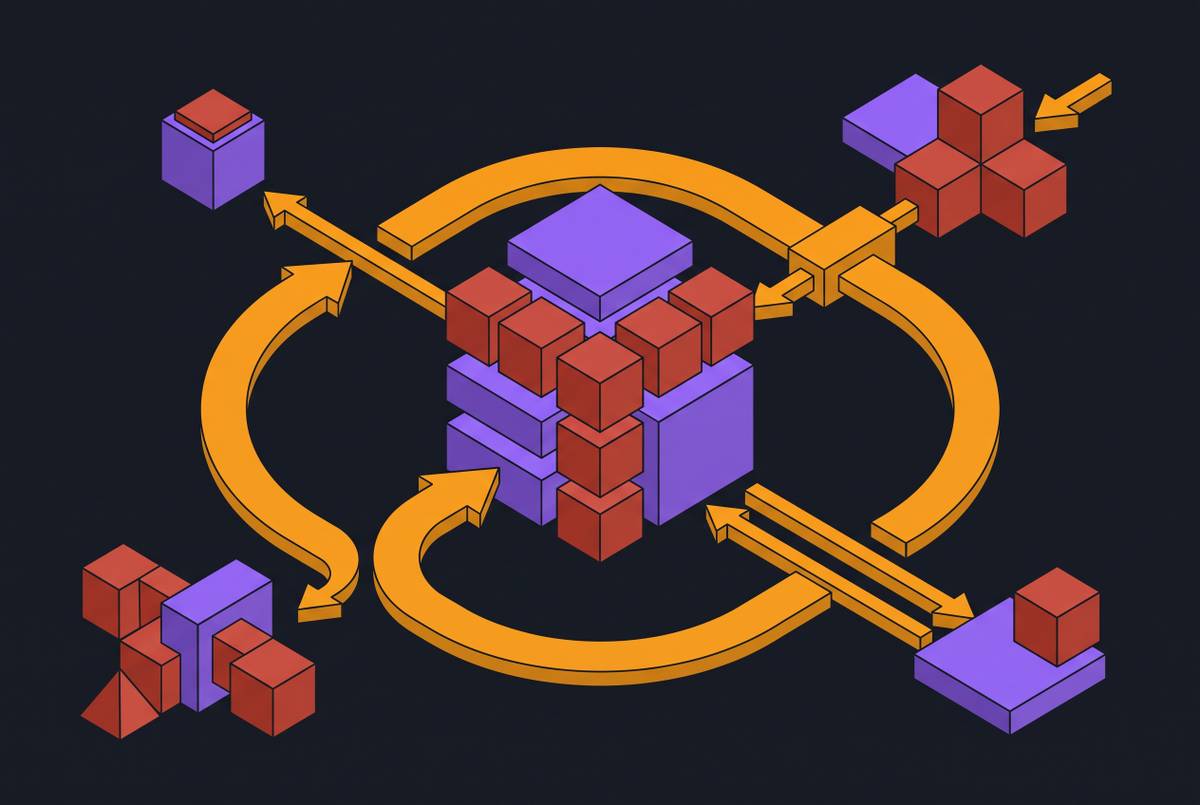
Multi-Agent Coordination in Administrative Workflows
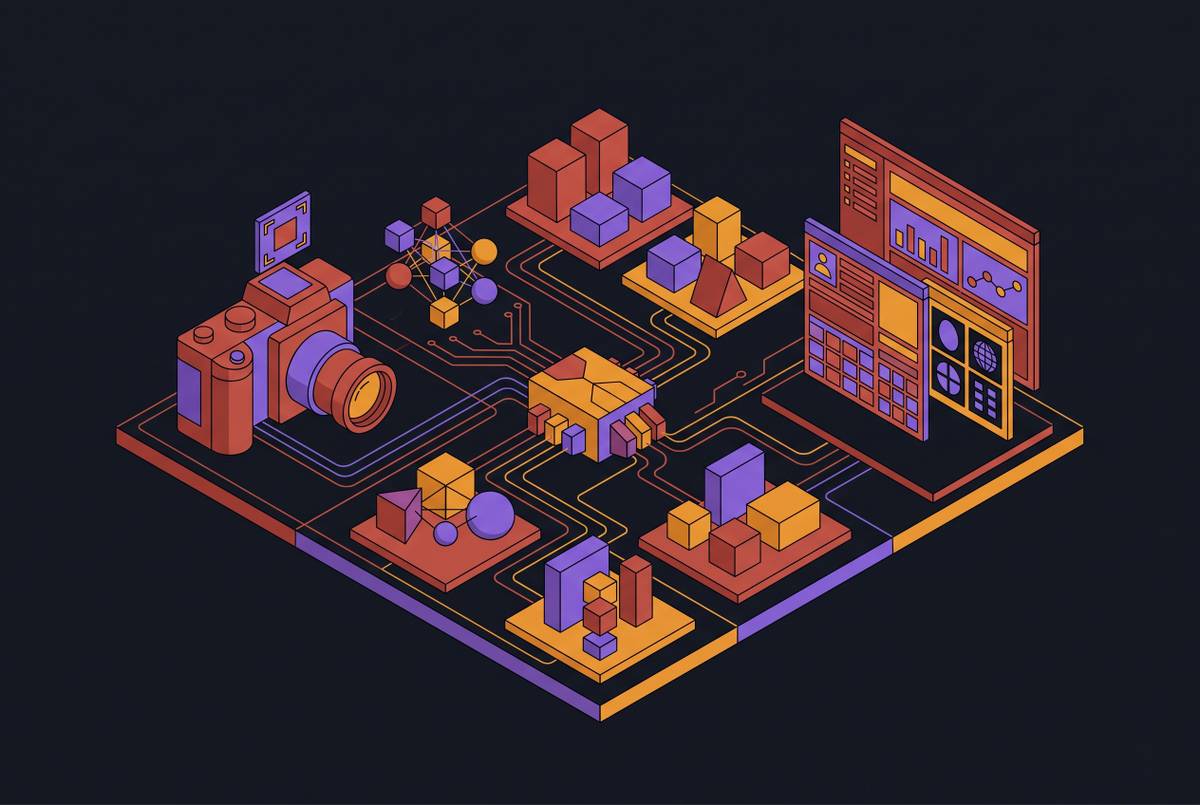
Computer-use agents enable workflows that span legacy systems with no APIs between them.
What multi-agent coordination means, and how it differs from older automation
Multi-agent coordination is the architecture that lets AI handle a full administrative workflow in healthcare, not just a piece of one. Scheduling, prior authorization, denial appeals, and payer portal work all span multiple systems and multiple staff roles in sequence, so no single agent, however capable, can carry a task from start to finish alone. The industry has spent the past few years bolting single-purpose bots onto individual steps instead of solving that problem. That approach was always going to hit a wall the moment a workflow needed context to survive a handoff between systems that were never built to talk to each other, and it has.
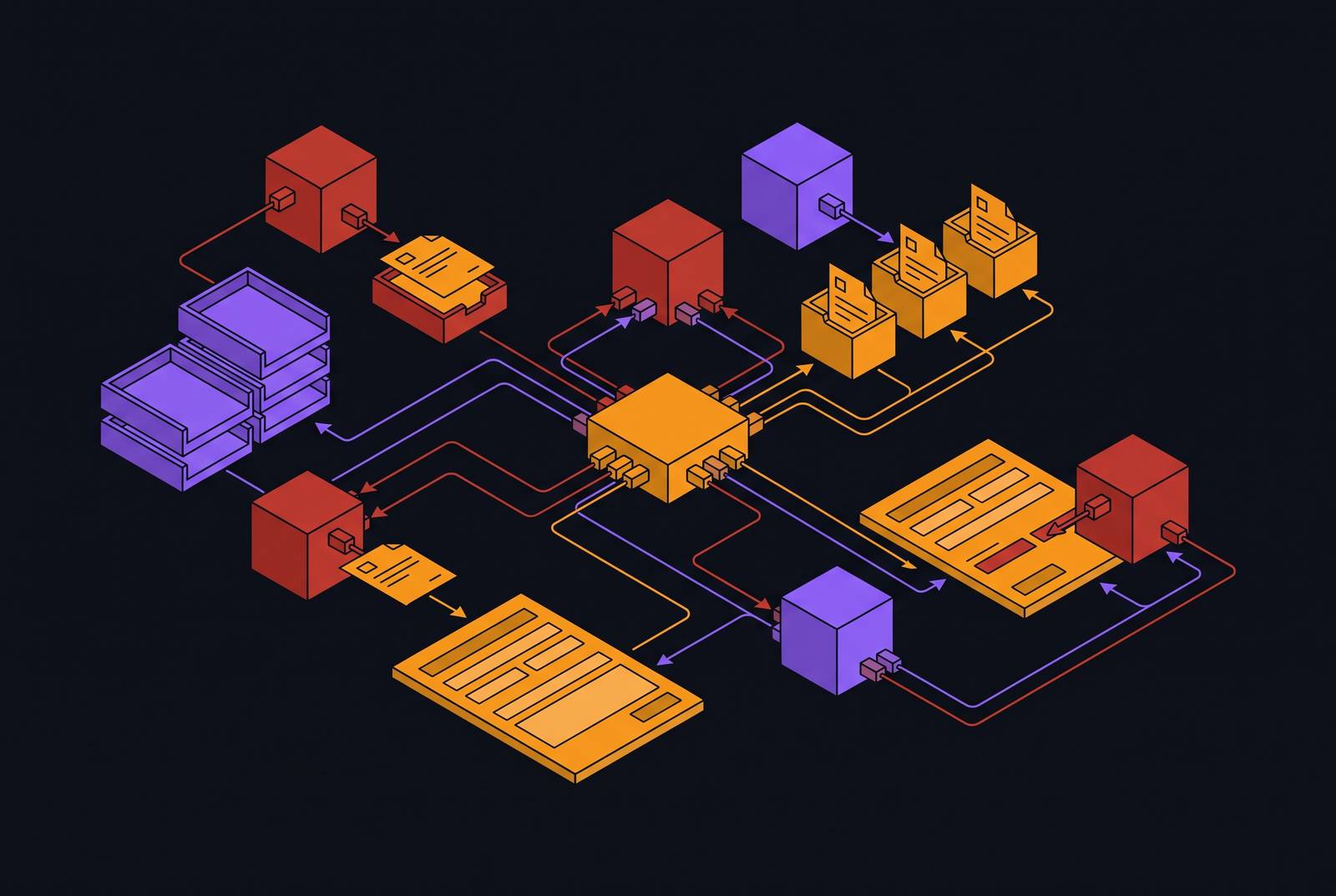
A multi-agent system splits a workflow into discrete pieces and hands each piece to a specialized agent, with the output of one agent feeding directly into the next. That part sounds simple. The coordination layer decides who does what and when, and almost all the engineering difficulty lives there, a fact most vendors gloss over.
Traditional workflow automation handles one repeatable task in isolation: extract this field, route this fax, populate this form. Orchestration manages the dependencies, the resource limits, and the business logic across an entire process, acting as a control framework rather than a task executor. That distinction matters more in healthcare than almost anywhere else, because a claims workflow rarely fails at the task level. It fails at the seams between tasks, at the exact moment one system's output has to become another system's input.
Robotic process automation, the technology most healthcare back offices leaned on for a decade, follows a script, and it breaks the moment a payer redesigns its portal or moves a button three pixels to the left. Computer-use agents don't carry that fragility. They read the screen the way a staff member would and adjust to what's actually there, rather than to what a script assumed would be there. Voice AI solves a narrower problem still: it answers the phone. It doesn't check eligibility, submit an authorization, or file an appeal. Multi-agent systems are built to cover the entire administrative breadth those two approaches leave untouched.
Three orchestration models come up in the technical literature, and they are not interchangeable. Graph-based orchestration organizes agents and tools as nodes on a directed graph, which makes execution deterministic and auditable, the two properties a regulated billing environment cannot do without. A second model assigns agents distinct, bounded responsibilities and lets them coordinate through messages; it's intuitive to design but harder to lock down against unpredictable paths. Chain-based, or adaptive, orchestration lets agents decide their own next steps inside a loop, which makes it the most flexible model and the least predictable, better suited to research settings than to a claims workflow with financial and compliance consequences attached.
For healthcare operations, graph-based and role-based orchestration are the only architectures that should be on the table. Chain-based orchestration's flexibility is a liability here, not a feature: predictability isn't optional when a payer contract, an audit, or a compliance officer sits on the other end of the outcome. According to Symphony Solutions, the multi-agent AI market is projected to grow at a 48.5% compound annual rate through 2030, and that number reflects demand for systems that run a complex, multi-step business process end to end, not enthusiasm for another chatbot.
Computer-use agents make multi-agent coordination viable across healthcare's legacy systems
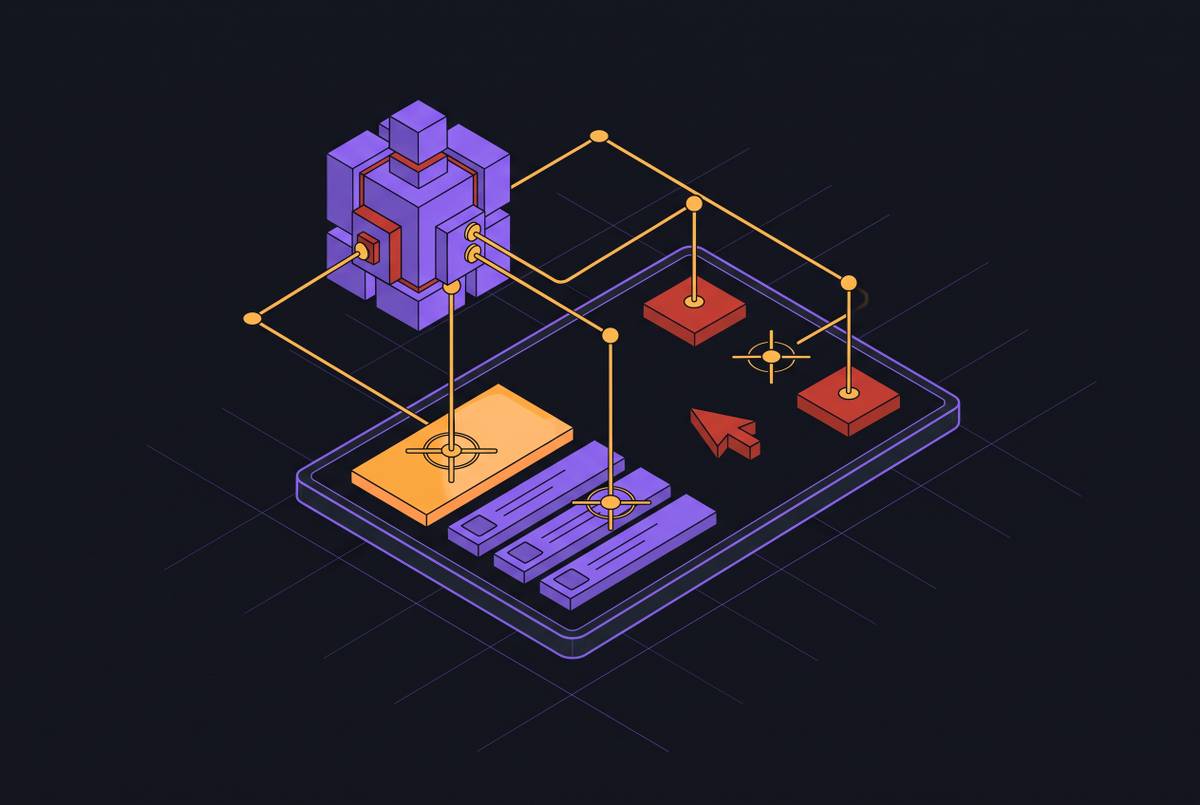
None of this works without a way to actually operate the software healthcare runs on. Computer-use agents interact with a graphical interface the same way a person does: they read the screen, click the right buttons, type into the right fields, and navigate menus without needing an API to hand them structured data. That last part decides whether the whole approach is even possible in this industry.
Most enterprise software in healthcare, including most payer portals and plenty of older EHR modules, still lacks a usable external API. Roughly 85% of business software today can only be automated through its graphical interface (risingtrends.co, 2026), so an agent that can only call APIs is an agent that can't touch most of the actual workflow. Each computer-use agent runs a loop: it perceives the screen or a file, reasons through what to do next using a language model, acts through a browser driver or GUI automation, and stores what it learned in memory so the next step, or the next agent, has the full context. That loop is what lets an agent log into a payer portal, locate a specific claim, and submit an appeal, the exact sequence a trained biller would run, without waiting years for that payer to ship an API that may never come.
Any system reading screens that contain protected health information has to be careful about what gets transmitted to a third-party AI provider. That's a live operational question for any healthcare deployment, and HIPAA compliance and SOC 2 Type II certification are the floor, not differentiators a vendor gets to advertise on a sales call. Any practice evaluating a computer-use agent vendor should expect both before the conversation about capability even starts, and should treat a vendor's hesitation on either as a disqualifying answer.
Putting computer-use capability and multi-agent coordination together lifts the ceiling on full-workflow automation considerably. Each specialized agent can operate whatever system its part of the workflow actually lives in, whether or not that system was ever built with automation in mind.
The structure of a coordinated agent team across a real prior authorization workflow
Prior authorization makes this concrete, because it's inherently multi-system. It touches the EHR for clinical documentation, the payer portal for submission, the scheduling system to hold the appointment, and a staff queue for follow-up. No single agent spans all four, the same way no single staff member typically does either.
A coordinated team maps onto the stages directly. An orchestration agent holds the end-to-end context: it tracks status across every downstream agent, manages the handoffs, and surfaces exceptions to a human reviewer when policy calls for it. An eligibility and benefit agent checks coverage and plan-specific prior auth requirements before anything gets submitted, which prevents a whole category of denial caused by incomplete eligibility data at the outset. A documentation agent pulls the relevant clinical notes from the EHR and formats them the way the payer's submission actually requires, since payers rarely agree on format with each other. A submission agent then navigates the payer portal directly, fills out the form, attaches the documentation, submits it, and captures the confirmation number, work that has no API to lean on and never will.
From there, a follow-up and status agent monitors the portal for a decision. If the case is pended, it runs the follow-up sequence on its own. If it's denied, it hands off to an appeals agent, and that handoff has to carry the full context along with it or the appeal starts from a weaker position than the original submission. The appeals agent drafts the appeal using the denial reason, the clinical record, and the payer's own policy language, then submits it and logs the trail.
That handoff is the hardest engineering problem in the system, harder than any individual agent's task. Research from ENTCOLLABBENCH identifies delegation, context transfer, parameter grounding, workflow closure, and decision commitment as the specific points where enterprise multi-agent collaboration tends to fail, and those same failure points show up in revenue cycle work. An orchestration agent's core job is keeping context from evaporating at each of those transitions. Druid's AI Adoption Benchmark reports containment rates ranging from 80% to 99.5% across financial services, healthcare, HR and IT, and higher education. The range itself is the point: the low end reflects exception-heavy, complex workflows, while the high end reflects high-volume tasks with clear rules, like a routine eligibility check. Prior authorization sits closer to the complex end, so human checkpoints belong in the design from day one, not bolted on after something goes wrong.
What coordinated agents change about denial management and appeals at scale
The financial stakes here aren't abstract. Medical coding errors alone cost U.S. healthcare $36 billion annually, and switching manual administrative transactions to electronic ones could save the industry at least $20 billion, according to Experian. Denial management sits at the center of that waste, and most practices are least equipped to fight it on equal footing.
Payers have been using AI to deny claims faster than human billing staff can respond to them. Call it a denial spiral: automated denial on one side of the transaction, manual appeal on the other, and the manual side loses that race by design every time, because a person checking a portal once a day cannot outpace a system generating denials continuously. A provider-side coordinated agent team is the structural answer, not a nice-to-have upgrade, because it creates an auditable trail at the point of care and at every step of the appeal that follows.
What actually changes when a coordinated team, rather than individual staff or a single-task tool, handles denials? Every denial gets worked, full stop, instead of triaged by dollar value the way understaffed teams are forced to triage. The smallest claim gets the same process as one many times larger. Appeals go out within hours of a denial rather than whenever someone gets to the queue. The audit trail is complete and deterministic, since each agent logs what it read, what it submitted, and what came back. Volume stops being a staffing problem: the same team that works 20 denials a day can work 200 without adding a single person to payroll.
The revenue impact isn't marginal, either. AI-driven denial management recovers, on average, $185,000 to $480,000 a year in previously written-off revenue for clinics using denial management services (mdercm.com), and that figure is a floor, not a ceiling, since it reflects current deployments rather than the upper bound of what's possible. Adoption has already moved past the early-adopter phase: 63% of healthcare organizations report they've integrated AI-powered automation into revenue cycle workflows (nationalbilling.com). The practices still running denials by hand are losing ground to competitors who already made the switch. They're losing ground to competitors who already made the switch.
Automating claim submission alone, without automating the follow-up that comes after a denial, still leaves money sitting on the table. The value comes from the chain working end to end, never from any single link in it.
Multi-agent systems handle scheduling, cancellation recovery, and referral intake as a connected workflow
Scheduling, cancellation recovery, and new-patient referral intake get treated as three separate problems in most practices, with different staff, different queues, and different software for each. Structurally, they're one workflow. A slot opens up, a patient needs it, and something has to match the two before the slot disappears for good, and most practices lose that race constantly without ever measuring how often.
An appointment orchestration agent holds that state across every channel and system involved, so a rescheduled or canceled slot doesn't fall between one system's record and another's. When a cancellation lands, a cancellation recovery agent queries the waitlist immediately, reaches out to the next eligible patient, confirms, and updates the schedule, running the same sequence a well-trained front desk would run, minus the delay of waiting for someone to notice the queue. A referral intake agent takes the inbound referral, verifies the patient's identity and insurance eligibility, checks what's actually open on the schedule, and books it, or flags the case for a staff member if the referral is missing something it needs. An eligibility and identity agent runs coverage verification in parallel with all of this, not after the appointment is already on the books, which is exactly the sequencing error that produces downstream denials nobody catches until it's too late.
The metric this workflow protects is provider utilization. An empty slot is revenue that never comes back, and a coordinated team that fills a cancellation within minutes rather than hours moves that number without adding a single hire. Industry analysis projects that agent specialization will push 70% of multi-agent systems toward narrow, focused agent roles by 2027, improving accuracy across the board, and the scheduling workflow above illustrates why cleanly: narrow, well-defined roles simply outperform general-purpose agents on tasks that are high-volume and time-sensitive.
Voice AI answers the phone. That's the whole job it does. The agents described here handle everything that happens after the call ends, including the EHR update, the eligibility check, the portal verification, and the referral record. That is where most administrative staff time actually goes.
Where multi-agent coordination still requires human judgment
Multi-agent systems in 2026 are ready for high-volume, rule-bound administrative work. They are not ready to run unsupervised through complex, cross-departmental decisions, and any honest account of this technology says so directly instead of hedging around it. ENTCOLLABBENCH's May 2026 findings on delegation, context transfer, parameter grounding, and decision commitment describe real, current limitations, not solved problems dressed up as marketing copy.
A few failure modes deserve specific attention when designing around them. Coordination has a cost: more agents talking to each other means more tokens, more latency, and more chances for circular loops or contradictory instructions to appear. Context loss at a handoff is probably the single most common source of production errors, since a downstream agent operating on incomplete information will confidently produce a wrong answer rather than an obviously broken one, which makes it harder to catch, not easier. Two agents given overlapping scope without a clear priority rule between them can take contradictory actions on the same case, and that's precisely the failure graph-based orchestration is designed to prevent by defining the execution path in advance instead of leaving it to be negotiated in real time.
Security deserves a harder look than it usually gets. Gravitee's State of AI Agent Security Report found that 88% of organizations have already experienced an AI-related security incident, yet only about 22% treat their agents as identity-bearing entities with their own access controls. That gap is the actual risk, not some hypothetical about rogue AI. In a healthcare setting, where PHI runs through every one of these workflows, agent identity and access scope need to be defined before deployment, not discovered afterward when something has already gone wrong.
Human-in-the-loop review is the correct design choice for any decision carrying financial, compliance, or clinical weight, and an orchestration agent's job description should explicitly include knowing when to stop and surface a case rather than commit to it autonomously. The governance model that holds up in practice: define the KPIs and the exception criteria before deployment starts, let the agent team run inside those guardrails, route the edge cases to staff, and measure results against the workflow-specific targets agreed on at the outset, not against some universal ROI figure pulled from a vendor deck.
Gartner expects more than 40% of agentic projects to be abandoned, often because costs escalate, business value stays fuzzy, or risk controls never got built in. The practices that avoid that fate share a pattern: they scope the workflow tightly, agree on what success looks like before go-live, and expand agent autonomy gradually, with checkpoints along the way rather than one leap to full automation. Deployment speed matters here too. A system that goes live in weeks, running inside the practice's existing software, lets staff watch how the agents actually behave in production before anyone decides to widen the scope, which beats a months-long integration that only gets tested once everything is already built and the mistakes are expensive to unwind.
What the shift from solo-task automation to coordinated agent teams means for practice operations
Point automation saves time on one task. Coordinated agents change the throughput of an entire workflow, a different order of impact entirely: a claim that would have sat in a denial queue for weeks now moves through appeal and resolution without anyone having to remember it exists.
Staff roles shift under this model rather than vanish: staff move toward review, exception handling, and judgment calls as agents take over execution. As agents take over execution, staff move toward review, exception handling, and the judgment calls that haven't been, and in some cases can't be, encoded into an agent's ruleset. That's a redistribution of work toward the parts of the job that actually require a person.
The advantage compounds for practices operating across multiple locations. A coordinated agent team can run the identical prior authorization protocol across fifteen locations at once, with the same consistency and the same audit trail at each one, a level of standardization that's genuinely hard to guarantee when the workflow depends on however each location's staff happens to be trained that quarter. Because the agents operate through the interface layer rather than requiring a new integration for every system involved, they work across whatever combination of EHR, payer portal, scheduling software, and clearinghouse a given practice already has in place. The workflow gets standardized, not the software stack underneath it: work moves away from automating tasks one at a time, toward running the whole process the way a coordinated team would, at a scale no team of that size could sustain on its own.