Prompt Engineering Patterns for Clinical Screen-Reading Agents
Well-designed prompts, not raw model power, determine whether clinical agents work reliably.
What matters most for the reliability of a clinical screen-reading agent in production is not which model sits underneath it but how its instructions are written. These systems are not chatbots answering FAQ questions; they are autonomous systems that perceive data, make decisions, take actions, and learn from outcomes. As of 2026, healthcare organizations are past the pilot stage, running agents in live production for prior authorizations, claims appeals, scheduling, and documentation. But the environments these agents work in, payer portals, EHR interfaces, scheduling dashboards, are visually messy, inconsistent, and prone to changing without warning. No amount of raw model intelligence fixes that on its own.
Whether an agent behaves like a trained staff member or produces erratic output comes down to whether its prompts tell it what to look at, what to do when the screen doesn't match what it expected, and when to stop and hand the problem to a person. The OS-Marathon benchmark, built by Oxford and Microsoft researchers in 2026, found leading computer-use agents struggle badly on long, repetitive tasks, nearly the entire shape of clinical operations work, even with strong underlying models, and that gap holds up across the benchmark's results. That structural failure persisted even as better models were expected to fix it automatically. OS-Marathon tested that assumption: naive task decomposition still let errors accumulate and spread between subtasks. The architecture of the prompt governs the outcome, not just how well the model reasons.
How clinical screen-reading agents' prompts carry the weight of reliable operation
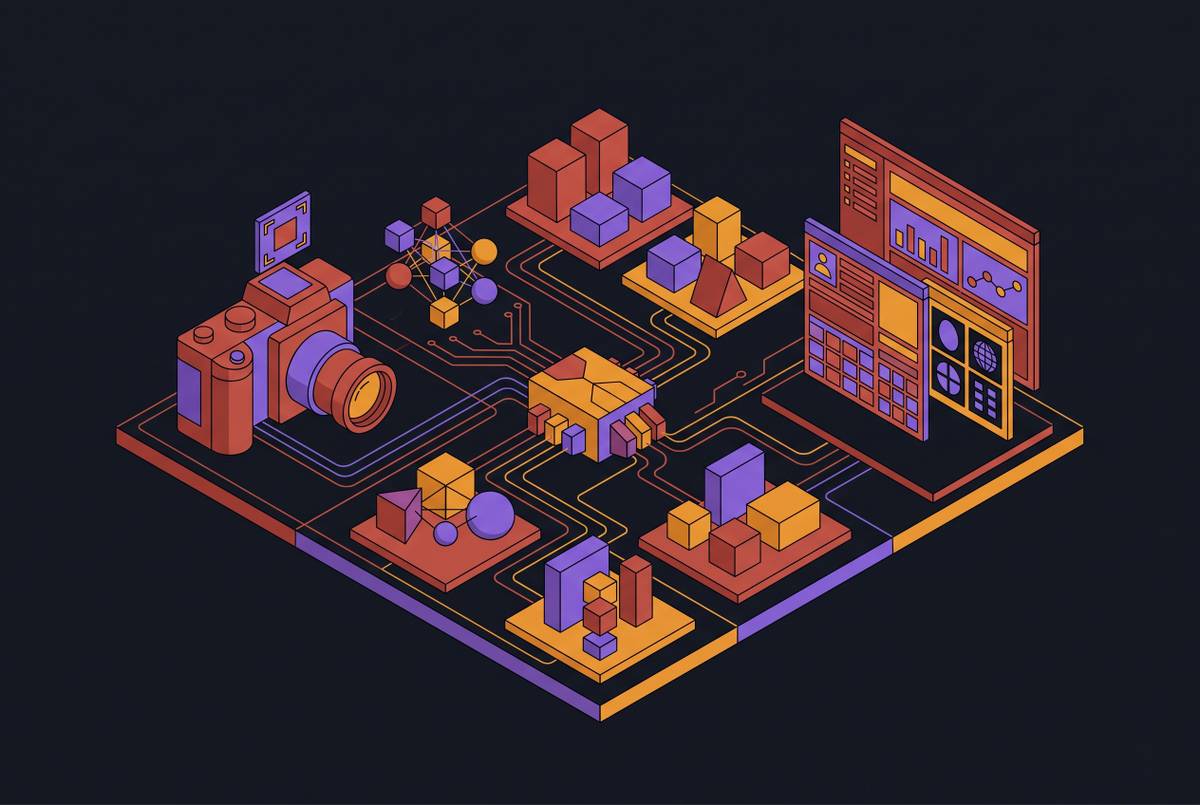
Screen-reading agents work like a staff member at a keyboard: reading the screen, clicking, typing, and navigating, without needing API access or a formal EHR integration. That distinction matters, because it's the reason these agents can be deployed against systems that were never built with machines in mind.
The mechanism underneath is two stacked layers. Robotic process automation drives legacy payer portals like a macro, while large language model agents add natural-language understanding of what's displayed. The operating mechanism is layered: RPA logs into and operates legacy payer portals automatically, and LLM-based agents add natural language understanding of what they see on screen, and that combination enables autonomous navigation of interfaces that were never designed for machine interaction.
The workflows these systems handle are specific: submitting and resubmitting prior authorizations, appealing claims denials, scheduling referrals, recovering cancellations, and populating documentation. Every one of them requires reading a screen state that changes moment to moment, not pulling from a fixed data structure. Prosper AI's agent Kate illustrates how far "screen" extends: it calls a payer, navigates the phone menu, holds, talks to a representative, and obtains authorization details, a task taking half a day or more for a human. The screen isn't only pixels on a monitor; it includes a voice menu and live conversation, so the same grounding and decision logic must hold in an audio channel too.
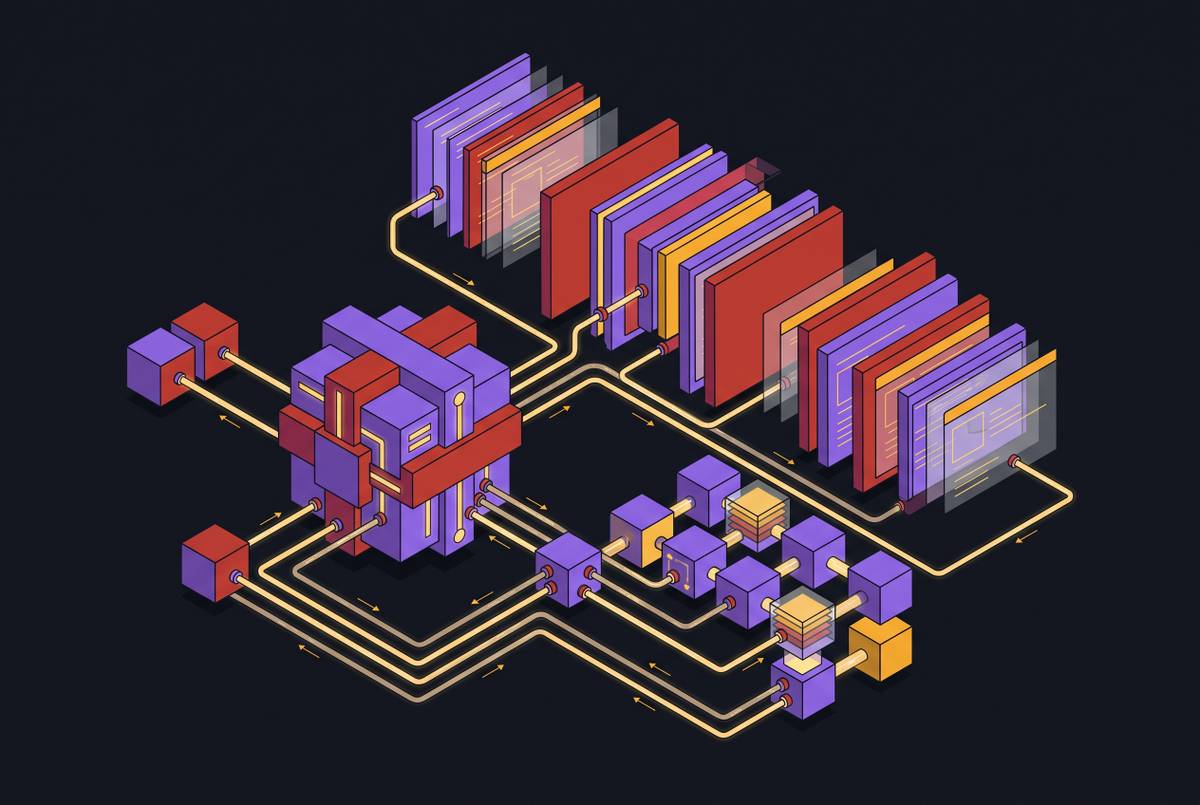
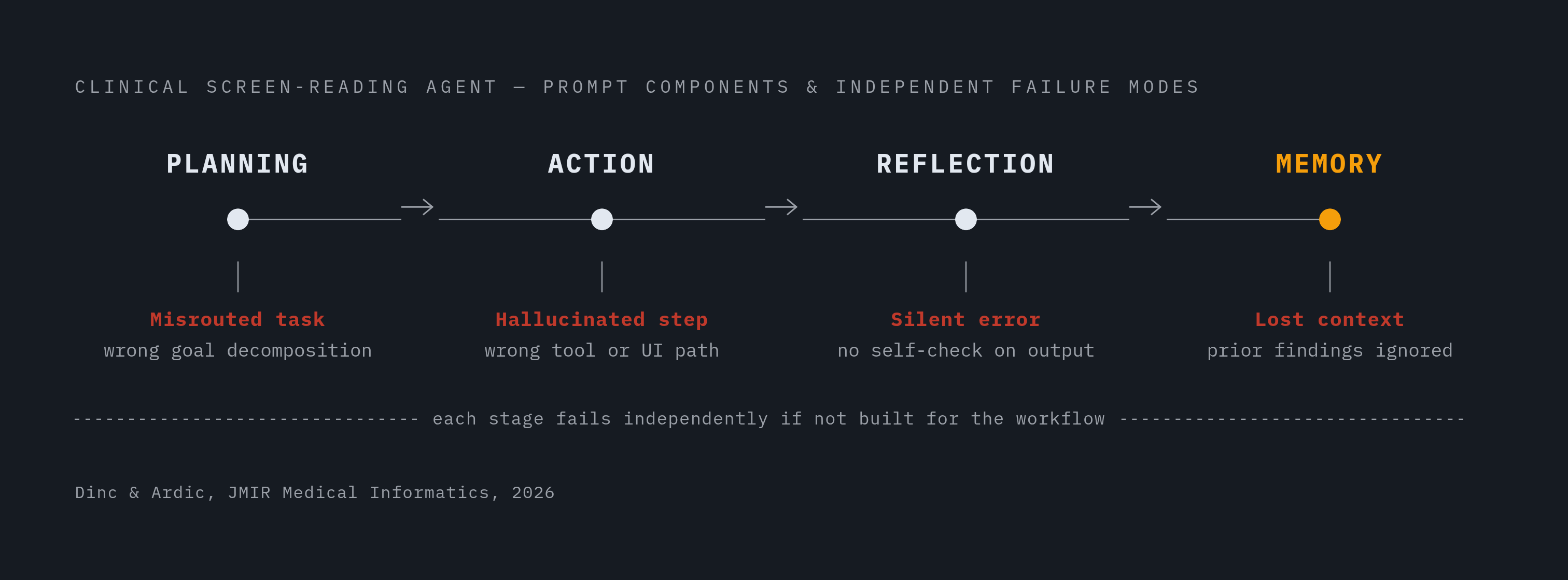
None of this works without the prompt doing what an API would otherwise do for free: identifying fields, recognizing workflow state, applying decision logic, catching errors, and knowing when to escalate. A 2026 JMIR Medical Informatics viewpoint by Dinc and Ardic frames this as four components, planning, action, reflection, and memory, each dependent on sound prompt design. Each of these four jobs fails independently if not built with the workflow's specifics in mind.
Grounded visual context instructions: telling the agent what it is looking at before asking it to act
The most common way a screen-reading agent goes wrong is by acting on a screen it has misread. Payer portals and EHR interfaces shift constantly: labels get renamed, buttons move, conditional fields appear only after a prior selection. An ungrounded agent treats every screen as a guessing game, since nothing told it what "correct" looks like beforehand.
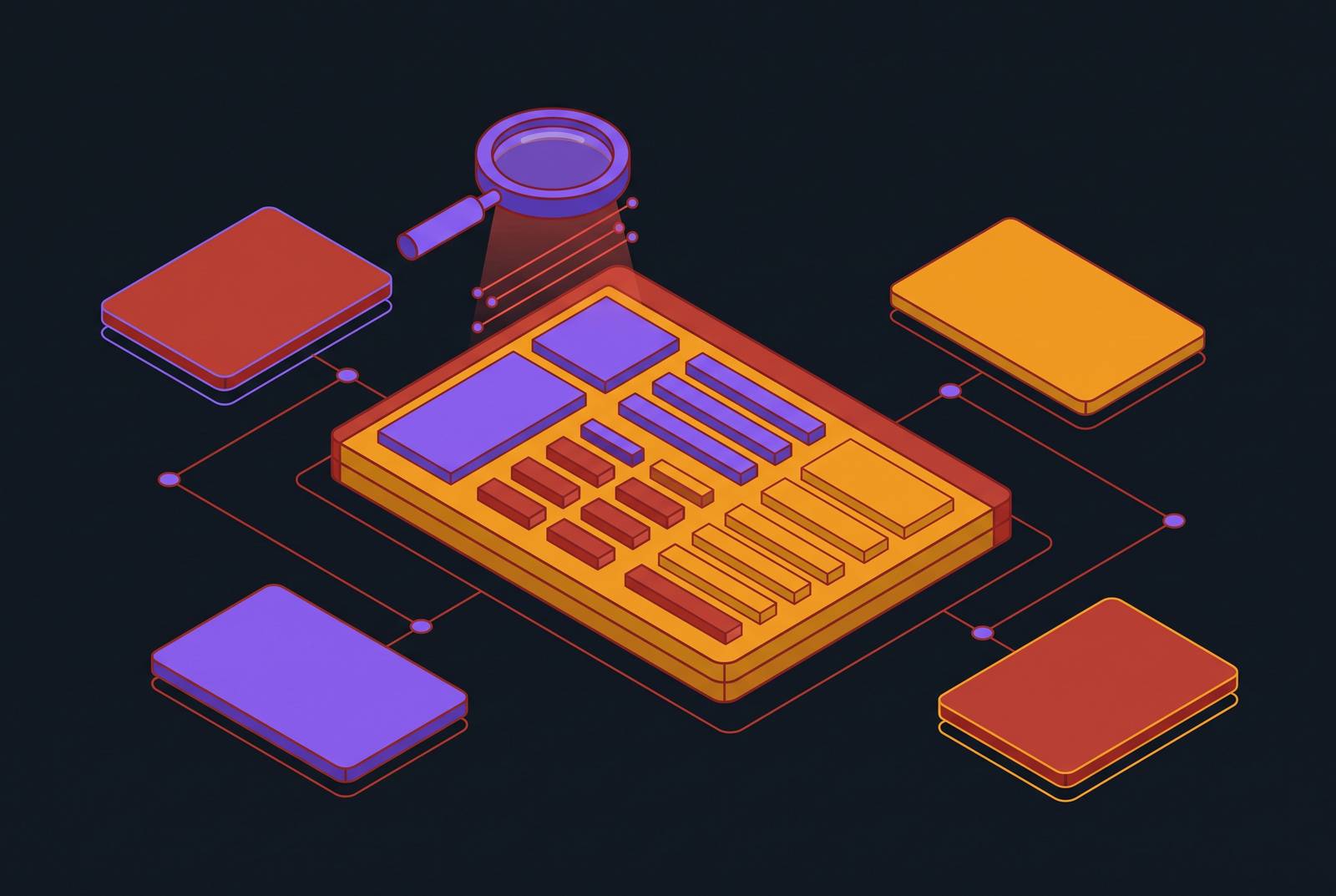
Grounding fixes this by giving the agent a description of the expected screen, a field label, heading, or form title, some landmark confirming whether the state is valid or has drifted. The JMIR 2025 tutorial by Liu and colleagues describes this for EHR-integrated agents as defining clear objectives and mapping FHIR resources so prompts reach the agent without breaking the clinical workflow. The same logic applies directly to screen-reading agents working payer portals.
Because grounding depends on what a specific screen actually looks like, it can't be written once and reused everywhere. In Flexbone's staged cutover methodology, agents are built portal-by-portal, Availity, Navinet, UHC, regional BCBS, because grounding must be portal-specific; a generic prompt working on one portal will misread landmarks on another. A grounding prompt tuned to Availity will misread Navinet, since the two portals don't share a visual vocabulary. Grounding also enables the memory component in MedAgentBench v2, the benchmark presented at the 2026 Pacific Symposium: the agent learns from prior failures by appending corrective instructions afterward.
Structured decomposition of repetitive sub-workflows: how to stop errors from compounding across a multi-step task
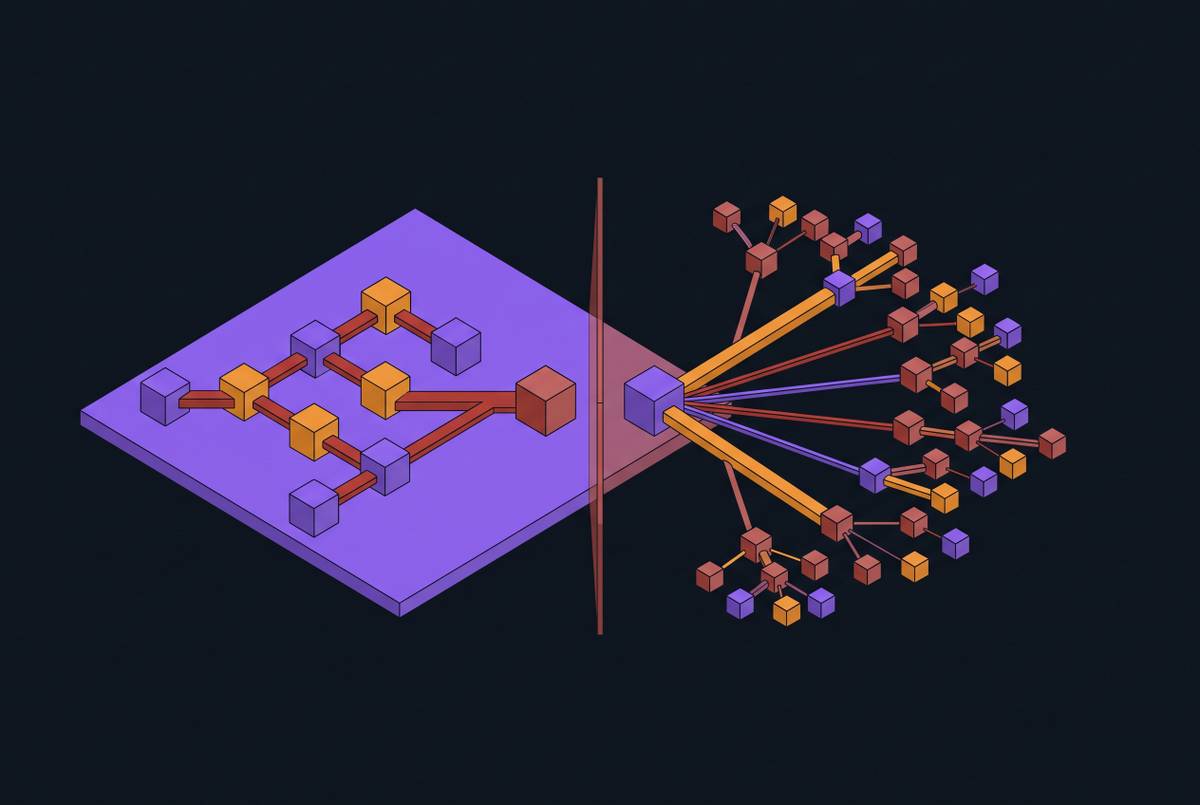
Clinical operations run on repetition. A queue of prior auth requests, a stack of denial letters that all need the same review, a batch of referrals that all follow the same intake steps. OS-Marathon found directly that handing the workflow to an orchestrator breaking it into per-instance subtasks did not stop errors accumulating; a mistake in one subtask corrupted the next.
More decomposition isn't the fix. Structured decomposition is: each subtask's prompt must check whether the prior step succeeded, specify what context to carry forward, and define what "done" looks like. OS-Marathon's answer, a technique called GraphDemo, adapts a general-purpose agent to a repetitive task using one human demonstration of the correct sub-workflow. The demonstration encodes the right logic once, written into the prompt structure rather than left for the model to reconstruct each pass.
Applied to a claims appeal, the subtask reading the denial letter must hand off a structured summary containing the denial reason and the missing documentation type to the subtask assembling the corrected submission. The second agent should work from what the first already extracted, not re-read the original letter. That discipline is visible in production numbers. One health system cut its claims appeals process from weeks to one or two days using an agent built around structured handoffs.
Fallback-state handling: what the agent must do when the screen does not match the expected state
Without explicit instructions for unexpected screens, an agent stops responding, acts on a screen it doesn't recognize, or loops on the same failed step. Any outcome is worse than a human simply saying they're stuck.
The unexpected states clinical agents run into aren't exotic. A payer portal times out the session mid-task. A form loads with a different set of fields than the last time the agent saw it. A denial letter arrives in a format the agent has never parsed before. A modal window pops up in the middle of a workflow that nobody wrote instructions for. Handling this requires the prompt to encode three things: recognizing something's off (a missing landmark, unexpected text, wrong field count); a first recovery move (refreshing, backing up a step, re-authenticating); and a rule for when to stop retrying and escalate to a person.
Industry forecasting has landed on this exact point as the deciding factor for which agents survive into wider use. MobiHealthNews' December 2025 executive prediction roundup found that systems that hold up are copilots within well-defined workflows, with guardrails and a human escape hatch. That escape hatch isn't provided by the model; it's a fallback instruction written into the prompt.
Prompt injection deserves specific mention here, because it's a fallback scenario unique to agents that read and act on screens with access to patient data. A clinical AI tool connected to an EHR can be manipulated through crafted input, typed by a user or delivered via a data feed, causing the agent to follow instructions smuggled into that input. That's a threat specific to this agent class, and it must be handled in how the prompt processes input, not assumed away. Between the CMS Interoperability and Prior Authorization Final Rule taking effect January 1, 2026, the maturation of LLM-powered voice agents, and browser-automation agents that can operate payer portals like a human, most PA workflows are now automatable.
Functionally, the agent flags its own uncertainty and defers to human review until confidence thresholds are met, as in Flexbone's shadow-mode methodology of running agents alongside human verification before autonomous release, typically across 50–100 shadow submissions per payer-service combination.
Tiered alerting and contextual suppression: managing how the agent communicates uncertainty without creating alert fatigue
An agent that kicks every uncertain moment up to a human reviewer isn't saving anyone time. An agent that never escalates anything is a liability waiting to surface. The middle ground is tiered alerting: classifying what the agent flags by urgency, and suppressing the lower-priority noise once something higher-priority is already sitting in front of a reviewer.
The JMIR 2025 tutorial lays this out to prevent alert fatigue: outputs are classified by clinical urgency, and contextual suppression hides lower-tier flags when a higher-urgency one is active. Written for EHR-integrated agents, it applies just as directly to one running a payer portal.
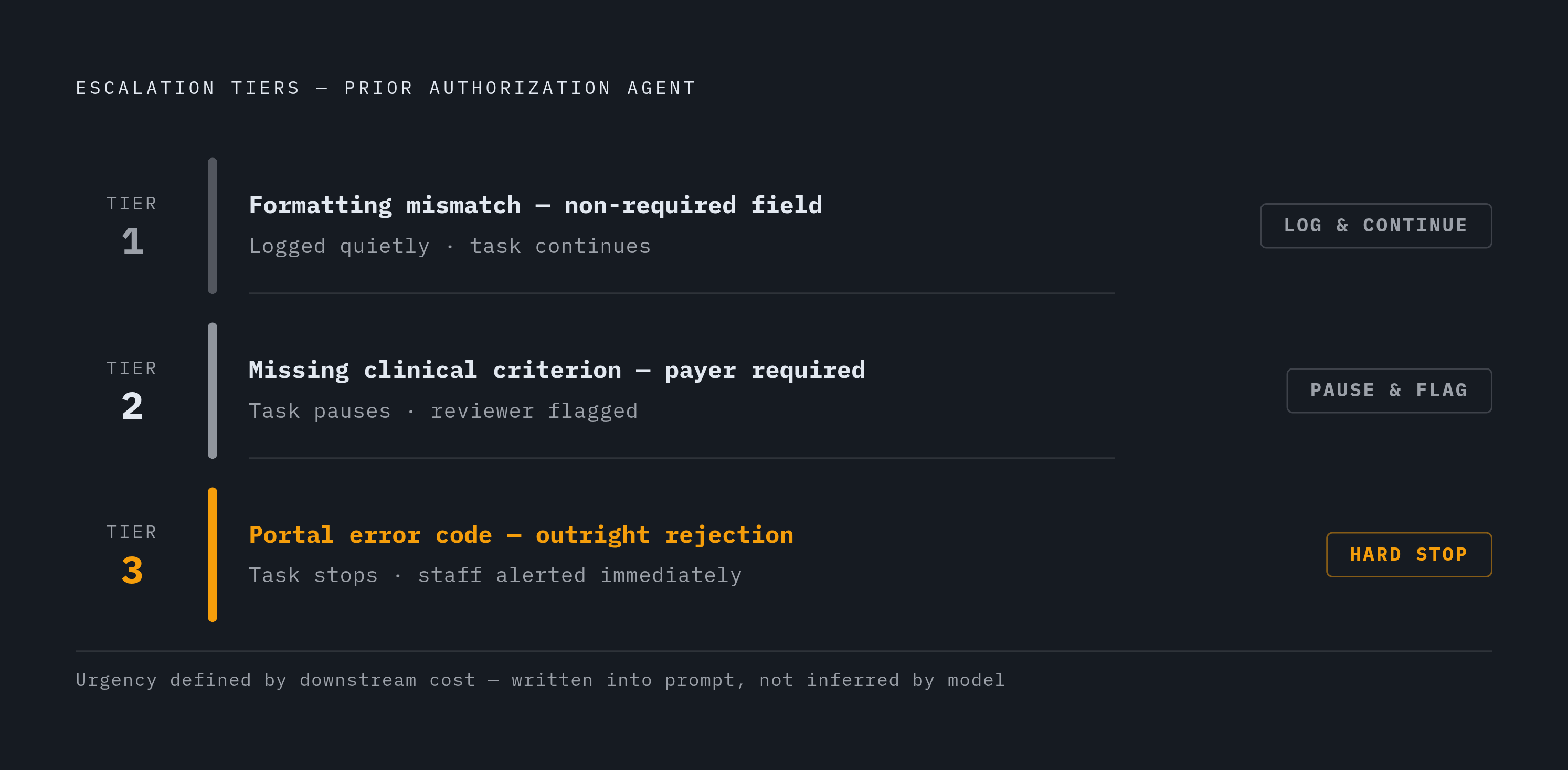
In a prior authorization workflow: a formatting mismatch on a non-required field gets logged quietly and the task continues. A missing clinical criterion the payer requires gets flagged and the task pauses for a reviewer. A payer portal error code suggesting outright rejection stops everything and alerts staff immediately. This hierarchy can't be left for the model to figure out, since urgency is defined by downstream cost, not general reasoning. That logic has to be written into the prompt directly.
The stakes for getting this wrong are rising as ambient scribes expand past documentation. ScienceSoft's Q1 2026 Healthcare AI Trends analysis notes ambient scribes crossing into broader workflow platforms, populating structured EHR fields and feeding claims workflows. Once a scribe's output reaches coding or billing, a small mistake turns from a documentation quirk into rework, delayed claims, or an incorrect bill. ScienceSoft's analysis frames ambient AI as moving beyond documentation, with scribes beginning to use chart context, update EHR records, and support claims and other downstream workflows. The same discipline applies at scale: an agent handling hundreds of daily prior auth requests across practices needs consistent escalation thresholds everywhere, or reviewing staff end up buried regardless of overall accuracy.
Memory and failure-informed prompt refinement: how agents improve on the same workflow over time
A prompt that works well on day one doesn't stay that way. Payer portals update layouts, fields shift, and unanticipated edge cases start appearing. Holding an agent's reliability steady over months requires a way to feed real failures back into how the prompt is written.
MedAgentBench v2 builds this mechanism: a memory component letting the agent learn from past failures, tested across 300 clinically derived EHR tasks. The memory doesn't touch the model itself. It changes what gets carried into the prompt on the next attempt. In practice, when a subtask fails, wrong field, rejected submission, unhandled screen state, the failure is logged with its context and the subtask's prompt is updated for the new case. That reflects a prompt update, not a retraining run.
EthermedAI's prior authorization agent, trained on over 100,000 payer policies, shows a related version of the same problem. That policy knowledge lives at the prompt level and must stay current, or the agent keeps submitting against outdated rules and generates avoidable denials. Regulatory change forces the same maintenance work. The CMS-0057-F Interoperability and Prior Authorization Final Rule changed payer API requirements and decision-timeline rules, with the timeline provisions taking effect January 1, 2026 and the API requirements following January 1, 2027. Agents running PA workflows needed prompt updates to match new submission paths and decision windows, or they would degrade almost immediately.
Prompt refinement and model retraining are different activities on different timelines and costs. A prompt update can go from identified problem to deployed fix in hours. Retraining takes weeks and requires infrastructure most clinical operations teams neither have nor need to build.
Every time an agent pulls up a patient record or lab result, it carries out a regulated data access event. Nothing about the underlying model recognizes that on its own. Most models carry no built-in HIPAA awareness, so constraints must be written explicitly into the prompt's data-handling instructions rather than assumed from training.
That places compliance in the same category as grounding, fallback logic, and tiered alerting: a design decision made at the prompt level, not a property that shows up automatically because the underlying model is capable. An agent can navigate precisely, decompose workflows correctly, and escalate at the right threshold, yet still create legal exposure if nothing governs what it may touch, log, or pass along. The same engineering discipline that makes an agent behave reliably on screen has to extend to how it treats the patient data it encounters along the way.
Sources
- AI agents in healthcare: 12 real-world use cases (2026)
- AI Agent Examples: 10 Real-World Use Cases in 2026
- OS-Marathon: Benchmarking Computer-Use Agents on Vast-Horizon, Repetitive Tasks
- Executive predictions for healthcare AI in 2026, Part 1 | MobiHealthNews
- Q1 2026 Healthcare AI Trends by ScienceSoft | March 2026
- Neural at ArchEHR-QA 2026: One Method Fits All: Unified Prompt Optimization for Clinical QA over EHRs
- Securing Computer-Use Agents: A Unified Architecture-Lifecycle Framework for Deployment-Grounded Reliability